Agricultural Crop-Protection Drone Guide: Crop Monitoring, Farm-Supply Transport and Made-to-Order
Agricultural Crop-Protection Drone Guide: Crop Monitoring, Farm-Supply Transport and Made-to-Order
After a few overseas agriculture projects, sitting down with distributors, the complaint I hear most isn't "your machine isn't powerful enough." It's "we have too much land, too few people, can't get around the fields, discover pests and disease too late, and still have to carry fertilizer on someone's back." This guide isn't a spec sheet. It walks through what drones can realistically plug into on a farm — standard catalog models do monitoring and farm-supply transport; spraying-class plant-protection airframes are built to your spec via OEM/ODM. What we can do and what we can't, both on the table.
First, the real machines on hand (all specs from our published catalog — you can cross-check):
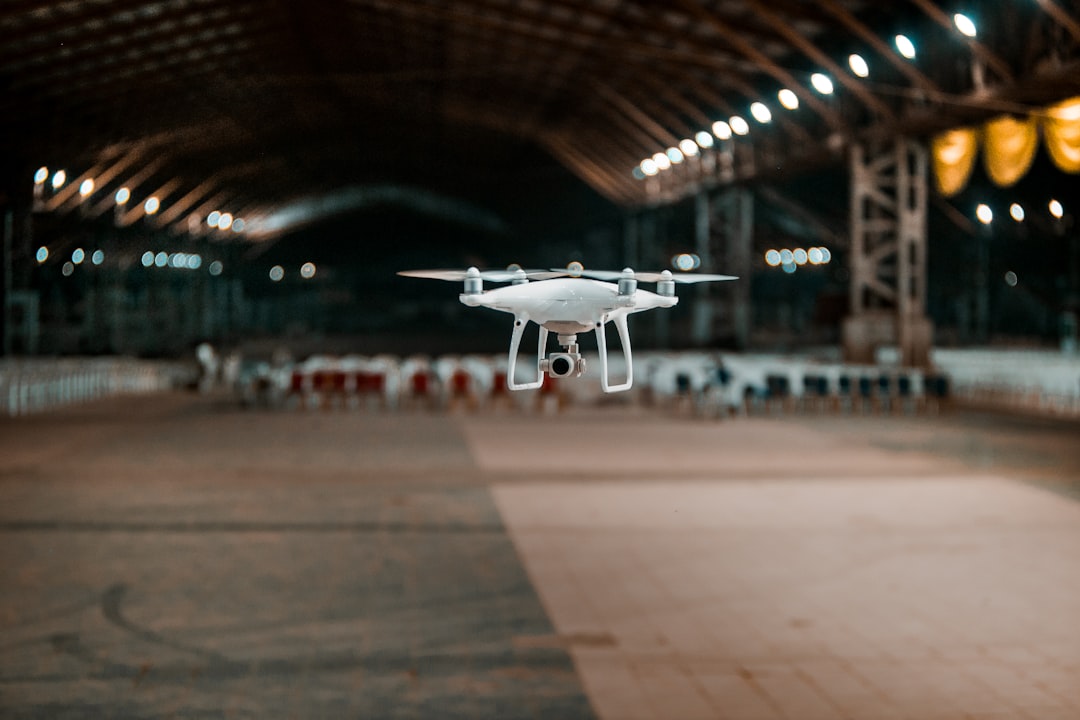
- FPV camera series (10/13/15/7-inch, S220 PRO, etc.): the core payload is a camera/lens for HD visible-light inspection; zoom and low-light options are available; specific specs follow what's published on the site.
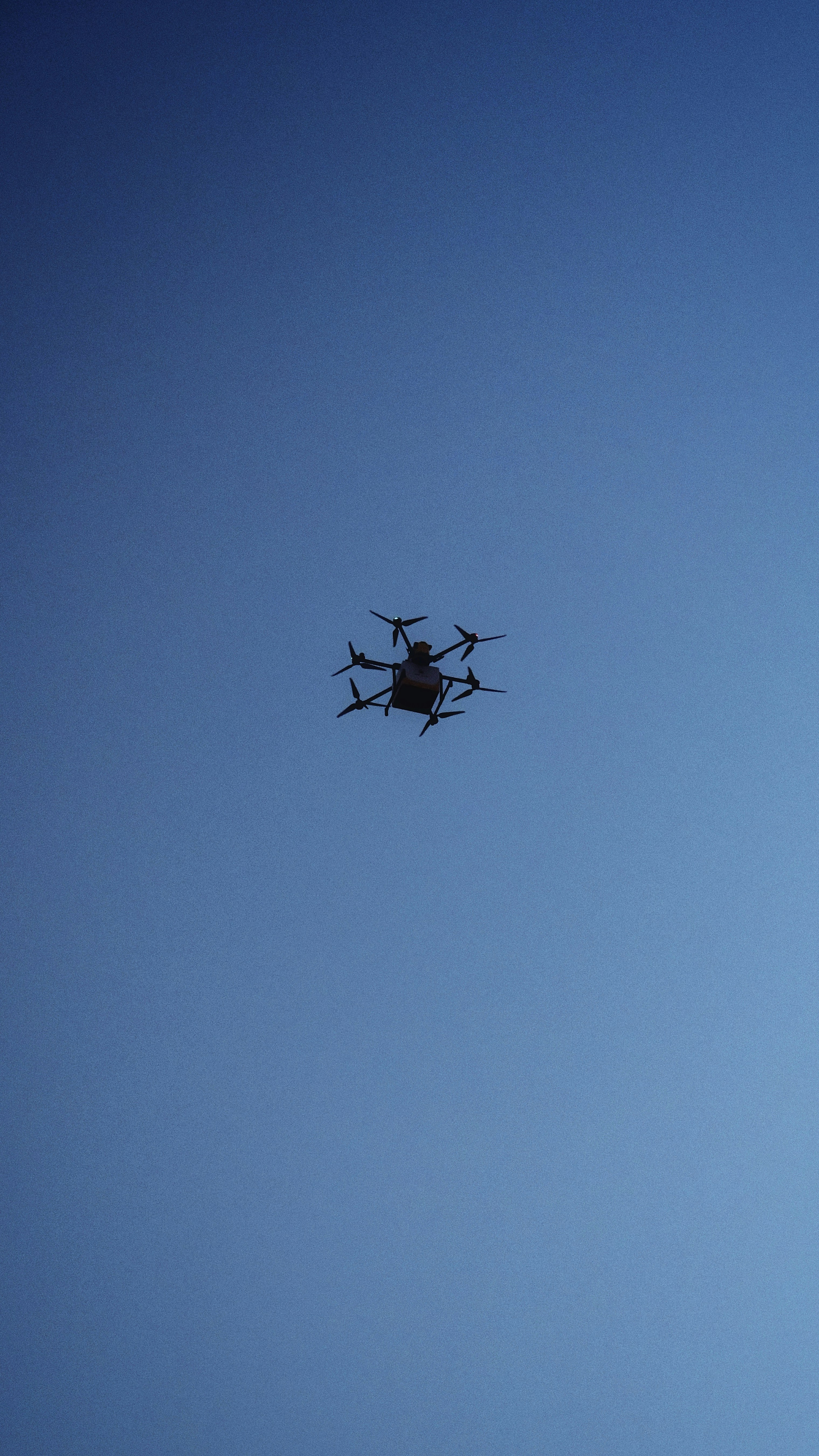
- TS100 quad-rotor eight-motor cargo drone: max payload 100 kg; nominal 30 km video-link / control range; endurance ~50 min unloaded, ~10 min at full 100 kg load; suited for moving bulk farm supplies to places vehicles can't reach.
- FY-VT04 vertical take-off and landing UAV: VTOL fixed-wing + multi-rotor; max payload 2.0 kg (best ~1.5 kg for ~140 min flight); no-load endurance ~240 min; nominal 30 km ground-station range; built for wide-area survey and light transport.
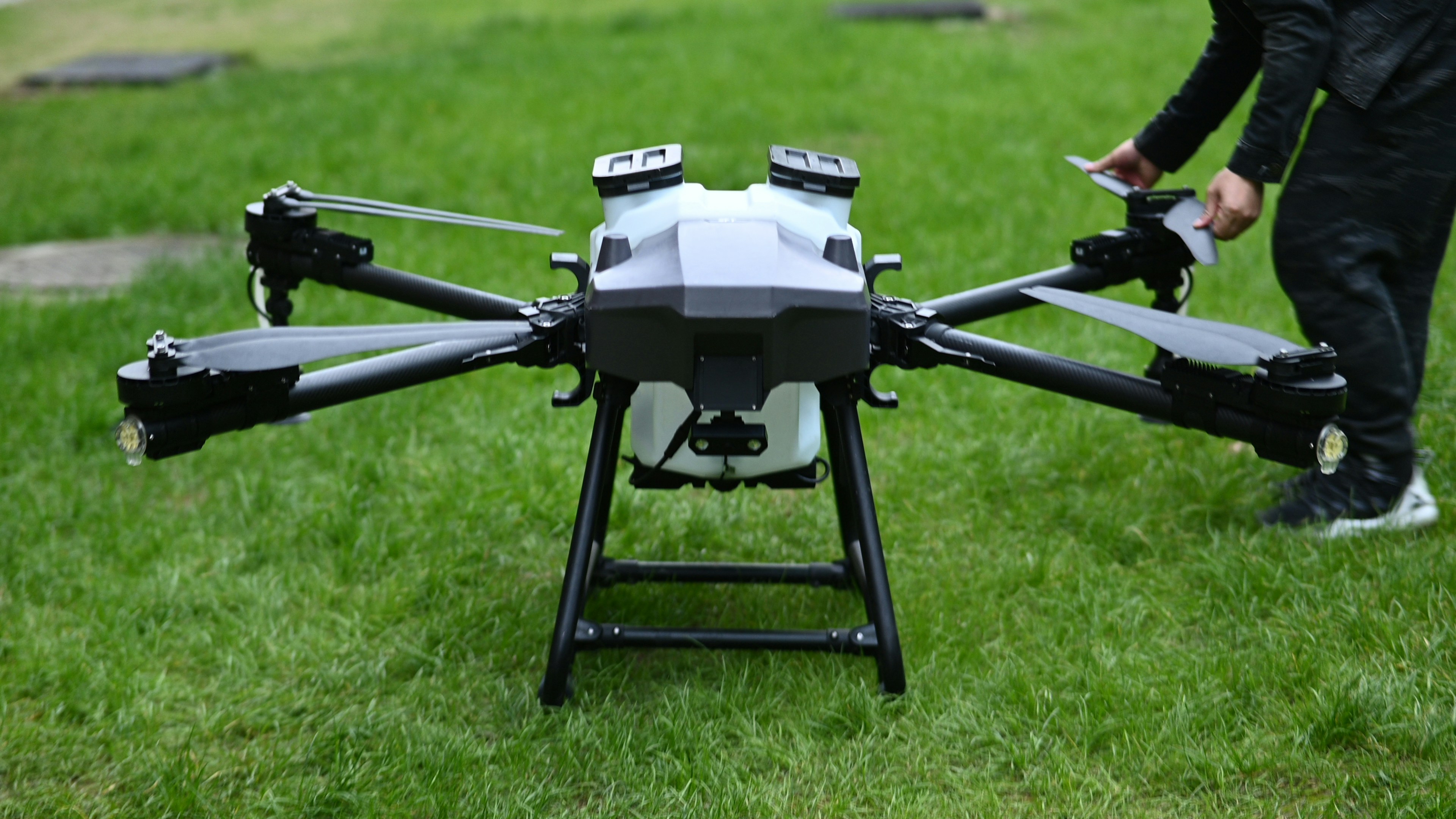
- Plant-protection spraying airframe (tank + nozzles + pump): built to order through OEM/ODM. Tank capacity, spray width, payload, and flight controller are matched to your operation profile. These are not shelf items; they're produced per order.
1. Why Agriculture Needs Drones
Anyone working the land knows the pain isn't one problem — it's a chain:
- Slow scouting, narrow coverage: in the Middle East, a date-palm grove of dozens of trees, with palms over ten meters tall, means climbing scaffolding just to look at the canopy. On African-slope coffee farms, leaf disease is found on foot, and by the time you see it, it's already spread. A few thousand acres of row crops take two agronomists two days to walk.
- Labour is expensive and short in peak season: scouting and carrying all eat labour. Sowing and harvest windows are the worst — pay is high and people are scarce.
- Farm supplies are carried on shoulders: terraced tea fields, desert oasis plots — tractors can't get in. Seed, fertilizer, small tools, all on someone's back. The person is exhausted before the work is.
- Decisions are made blind: which block has weak seedlings, which row is short of water, which patch has disease — the head office usually estimates from experience, without a real-time aerial view to compare against.
Drones won't replace "doing all the work for people" — that's a fantasy. But on the two stretches where you can't see everything and can't get things in, drones close the gap: see clearly, deliver in.
2. What This Guide Covers (and the Line We Won't Cross)
This is where people get the wrong idea, so let me draw it in two tiers, no mixing:
Standard catalog models: monitoring + farm-supply transport
The FPV camera series does the seeing — scouting fields, shooting imagery, mapping. The TS100 and FY-VT04 do the carrying — moving farm supplies from village depots and roadside collection points out to the plots. These two are standard catalog, transparent-spec machines. You order, we ship.
Spraying-class plant-protection airframes: OEM/ODM made-to-order
If what you want is "fly and spray at the same time," that's a dedicated plant-protection UAV — a tank, nozzles, a pump, a different system from the monitoring/transport machines above. These airframes are built to your spec — give us your operating area, crop type, and per-mu dosage, and we configure tank capacity, spray width, payload and flight controller accordingly. Made per order, not stock.
I draw the line here because I don't want anyone to think "buy a standard machine and you can spray." Spraying requires a separate, custom-built airframe. We say so.
3. Real-World Applications (What the Standard Models Actually Do, Not What We Wish They Did)
These aren't made up — they're what actually got used on projects:
- Orchard health scouting (date palms, olives, coffee): the FPV camera series flies one loop above the canopy and brings back a visible-light mosaic of the whole block. Which tree is yellowing, which patch is thin — you can circle it on the stitched image at a glance. A date palm over ten meters tall takes half a day to scout by hand; the drone covers a whole block in five minutes.
- Early pest and disease identification (coffee leaf rust, cocoa leaf spot): scouting imagery is reviewed by hand or a system, and early-stage rust on the back of the leaf or insect-egg traces shows up a week earlier than the alternative — far better than waiting for widespread leaf drop. This is most obvious on African-slope coffee farms.
- Field mapping and yield estimation: an orthomosaic lays out row direction, missing plants, and corner plots clearly, helping agronomy scheduling and yield estimation; field boundaries don't need to be measured with a tape anymore.
- Irrigation and soil investigation: blocked drip lines, low-lying waterlogging, plot-boundary bleed — all clearly marked on an aerial image, no need to wade through mud.
- Farm-supply transport (terraces, oases, remote plots): seed, fertilizer, small tools, soil samples, from a village point to a place the truck can't reach — TS100 handles bulk loads up to 100 kg, FY-VT04 handles dispersed small batches over long distances. On a narrow-ridge terraced tea field, a person carrying for one trip is half-dead by the end; the drone does it in one run.
For "fly and spray at the same time," refer back to Tier 2: plant-protection airframes are OEM/ODM made-to-order.
4. Choosing Payload and Equipment
Don't open with "how much can it spray." First decide if you need to see, to carry, or to spray:
- To see (monitoring): the FPV camera series, core payload camera/lens, zoom and low-light options as needed; multispectral and thermal payloads follow what's published on the site or are confirmed per requirement.
- To carry (supplies): bulk loads go to the TS100 (100 kg class); light, dispersed, long-distance runs go to the FY-VT04 (≤2 kg, long endurance).
- To spray (apply chemicals): the plant-protection airframe (tank + nozzles + pump) is OEM/ODM made-to-order. Tank capacity, spray width, per-pass area are configured to your operation profile. We don't fabricate shelf specs.
⚠️ Our proprietary UAVs (FPV series, TS100, FY-VT04) do not carry DJI-ecosystem accessories like megaphones or searchlights. Those are part of the DJI ecosystem — don't mix them into our machine payload list.
5. How It Fits into Your Existing Farm Operation
To be straight: drones aren't here to replace tractors and cultivators — they're here to fill the gap where people and vehicles can't reach or can't see everything. Distributors typically embed them like this:
- The pilot flies the FPV camera series along the field edge at a routine cadence (typically a few tens of meters above the canopy, with overlap pushed to 70%+). The scouting imagery goes back to the agronomist; the agronomist marks problem blocks on the image; ground crews then do targeted fertilizer or spray work — spraying is still done on the ground; the drone only sees and points.
- For remote plots, TS100 / FY-VT04 deliver supplies from the village point, saving the detour and the carry. The pilot plans a fixed route at base, and the drone runs it on schedule.
- For real spraying work, hand your operating parameters to us for OEM/ODM. Once the plant-protection airframe arrives, it joins the same farm-work schedule.
It's an "aerial extension" of ground operations — not a parallel system.
6. Deployment Notes (Things You Only Learn When You Actually Fly)
Spec sheets look great. When it actually flies, these things need planning ahead:
- Endurance trade-offs: TS100 at full load is only ~10 minutes. The transport point must be close to base, or staging points must be set up along the route. FY-VT04 is light and long-endurance, suited for wide-area survey, not the main tool for heavy lifting.
- Video-link and control range: both are nominally ~30 km. That's the link distance, not the one-way operational range. Return trips and terrain shielding all need margin.
- Weather windows: thunderstorms, strong crosswinds, and dust must be avoided. Check the window before takeoff; flyable conditions follow the published spec for the airframe. Middle East dust season and African rainy season both need accounting for.
- Take-off and landing area: TS100 with eight motors wants a flat pad. FY-VT04's vertical take-off is gentler on space, but the fixed-wing leg needs clear airspace — don't try vertical take-off under dense canopy.
- Remote route planning: TS100 supports pre-set routes, suited for fixed-frequency transport runs. The pilot doesn't need to fly manually each time; the drone runs the route to schedule.
7. Selection and Procurement Advice (Distributor View)
When recommending to a customer, three questions settle it: what to do, how big, how heavy:
- For scouting, imaging, mapping — the FPV camera series is the workhorse; pick the specific model by image quality and endurance.
- For bulk farm-supply transport — TS100 (100 kg class) is right. For dispersed, small-batch, long-distance — FY-VT04 fits better.
- For spraying applications — give us operating area, crop type, and per-mu dosage. The plant-protection airframe is OEM/ODM made-to-order.
If the customer has strong brand localization needs, our earlier Export Drone OEM/ODM Private-Label Customization Guide walked through how to customize appearance, payload and flight-controller parameters to the target market. Agricultural plant-protection airframes can go through the same channel — give us your operating parameters, we configure per order.
8. Civilian Use and Compliance Boundary
Drawing the line first is better than arguing later:
- This is entirely civilian use — crop monitoring, farm-supply transport, made-to-order plant-protection work. No combat, no weaponization.
- We do not commit to overseas on-site repair or long-term on-site warranty; factory QC, technical documentation, parts list, and remote technical support are available. Local service networks are the distributor's responsibility, or to be arranged with a third party.
- Actual operation must comply with the aviation authority of the operating country. For the chemical-application side itself, qualifications and local regulations vary widely and are not covered here — before deployment, follow the target country's rules and consult a locally qualified plant-protection service provider.
9. Cost and ROI (Limits Told Straight)
You have to be honest in this line of work. Drones in agriculture aren't a silver bullet. When running the numbers, include these:
- Standard models don't replace spraying: FPV series, TS100, FY-VT04 do monitoring and transport. For spraying, a separate custom-built plant-protection airframe is required — don't buy them as spraying machines.
- Short endurance at full load: TS100 with a full 100 kg only manages ~10 minutes. The volume per trip is high, frequency is limited — it's a "few large trips" machine, not a "high-frequency small item" machine.
- Weather windows: bad weather means no flight; have a ground fallback. Don't bet the whole farm operation on the drone.
- The return comes mainly from "turning what you can't see into something you can see" and "turning what you can't deliver in into something you can deliver in," plus the made-to-order plant-protection airframe's per-mu operation capability. It doesn't replace the whole ground operation.
When the math is on these lines, customers don't come back saying "it wasn't what I expected."
10. FAQ: Common Questions
Can your drones spray pesticides directly?
Standard catalog models (FPV series, TS100, FY-VT04) do monitoring and farm-supply transport — they don't spray. Spraying requires a dedicated plant-protection UAV (tank + nozzles + pump), and these airframes are OEM/ODM made-to-order through us. Tell us operating area, crop type, and per-mu dosage, and we configure tank capacity, spray width, payload, and flight controller accordingly. Made per order.
How far and how long can they fly?
Both transport models have a nominal video-link / control range of about 30 km (that's the link distance, not the one-way operational range). TS100 endurance is ~50 min unloaded, ~10 min at full 100 kg load. FY-VT04 is ~140 min at the best 1.5 kg load, ~240 min unloaded. FPV camera series specific endurance follows what's published on the site. Endurance varies sharply with load — pick by real load, not the no-load number.
Can it be used on remote farms with no network?
Yes. TS100 supports remote route planning: the pilot sets fixed routes at base and the drone flies the route; the video link and ground station run on the airframe's own link, independent of public networks. Middle East oasis plots and African remote plantations are exactly the use case. Specific coverage depends on local terrain and link margin.
Can it be used for crop scouting?
Yes — and this is the most direct use for the standard models. The FPV camera series does HD visible-light inspection; scouting imagery is reviewed by hand or a system, identifying crop-growth variation, early-stage pest and disease signs, and irrigation/soil anomalies. Date-palm groves, coffee farms, row crops — all covered. Much faster than walking.
Can it be made to order?
Yes. We support OEM/ODM customization — appearance, payload, and flight-controller parameters are all configurable to the target market and operational needs. In agriculture, the plant-protection spraying airframe (tank capacity, spray width, payload) falls in this category, configured to your operating parameters.
How do we get started?
Tell us your scenario, operating area and crop type, the transport or customization parameters you need, and the target market. We'll run a model selection assessment; if brand customization is needed, the OEM/ODM path applies. For the full plan and process, contact us for a one-on-one conversation.
Want to bring drones into your existing agricultural service network? Contact us for a free selection assessment — tell us plot size, crop type and target market, and we'll work through a real-plan based on actual airframe parameters and our customization capability.