1. Why a Drone Loudspeaker Matters More Than You Think
Most drone operators treat the loudspeaker as an afterthought — a checkbox item. In reality, it's one of the most mission-critical payloads you can mount.
Three scenarios where the speaker IS the mission:
- Search and rescue: When a lost hiker hears a drone voice saying "Stay where you are, help is coming," that audio cue is the difference between panic and survival.
- Public safety / crowd control: During a stadium evacuation or protest dispersal, a drone can cover ground 10x faster than ground teams — but only if people can hear and understand the instructions.
- Disaster response: After an earthquake or flood, cellular networks are often down. A drone with a loudspeaker is the only way to broadcast to isolated communities.
The common failure mode: choosing a speaker that's too quiet, incompatible with your drone, or lacks the right control interface for your workflow. Let's fix that.
2. The 5 Key Specs That Actually Determine Performance
When comparing drone loudspeakers, ignore the marketing and focus on these five numbers:
2.1 Sound Pressure Level (dB @ 1m)
This is the single most important spec. Measured in decibels at 1 meter from the speaker:
100–110 dB — Audible at 100–200m in calm conditions. Suitable for farm use and small events.
115–120 dB — Audible at 300–500m. Suitable for law enforcement and patrol operations.
125–130 dB — Audible at 500m–1km, penetrates wind noise. Suitable for SAR, disaster evacuation, and large crowd control.
Rule of thumb: sound pressure halves roughly every time distance doubles. A 130dB speaker at 1m delivers about 90dB at 100m — equivalent to a busy city street. You need the headroom.
2.2 Weight vs. Drone Payload Capacity
Every gram matters. Before shopping, check your drone's maximum payload capacity:
DJI Mavic 3E/3T — ~130g spare → Speaker weight budget: under 100g
DJI Matrice 30 Series — ~400g max → Speaker weight budget: under 250g
DJI Matrice 350 RTK — ~2.7kg max → Speaker weight budget: under 700g
DJI Matrice 400 Series — ~2.7kg max → Speaker weight budget: under 700g
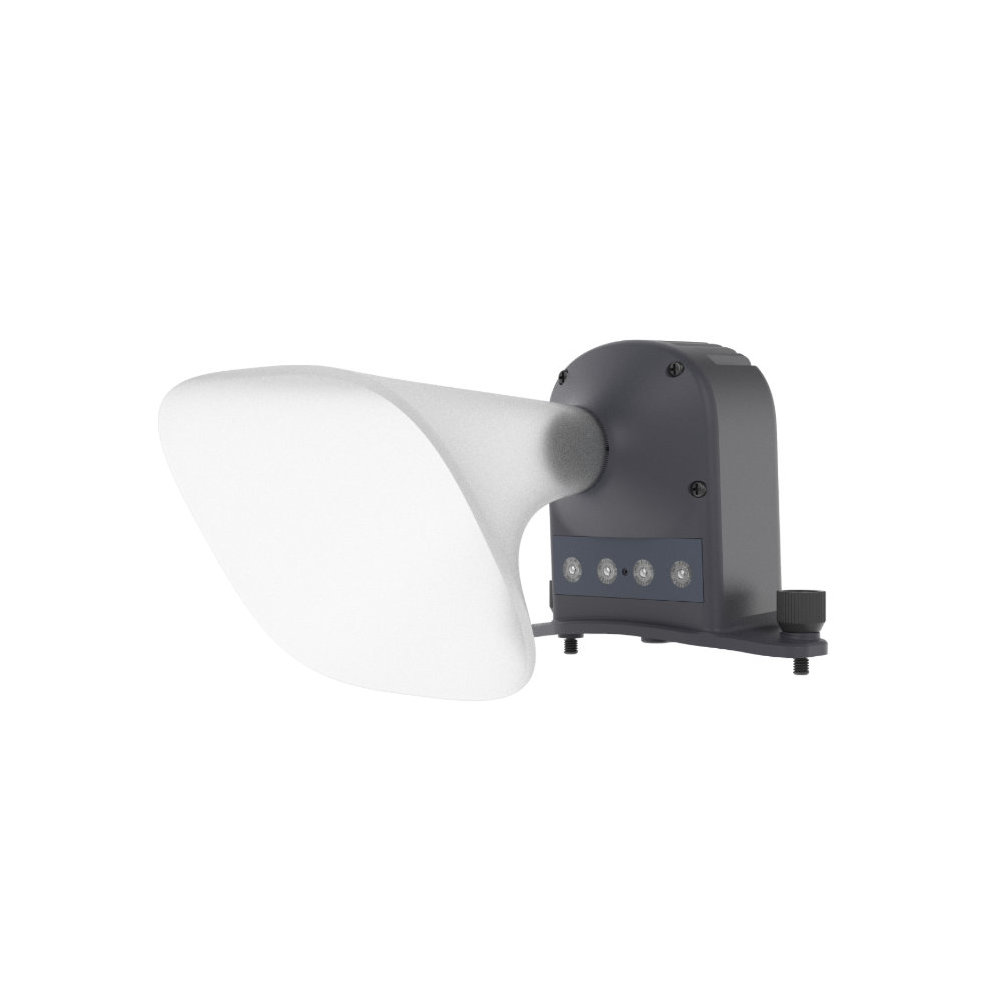
The speaker's weight plus its mounting bracket must fit within the drone's available payload. Overloading kills flight time and motor life. At 570g, a professional speaker leaves ample margin on an M350; at 265g, a compact unit fits comfortably on an M30.
2.3 Driver Configuration
More drivers = more sound energy in a smaller package:
- Single driver: Basic, lightweight. Adequate for short-range announcements.
- Dual compression drivers: Noticeable volume increase. Good for 300–500m coverage.
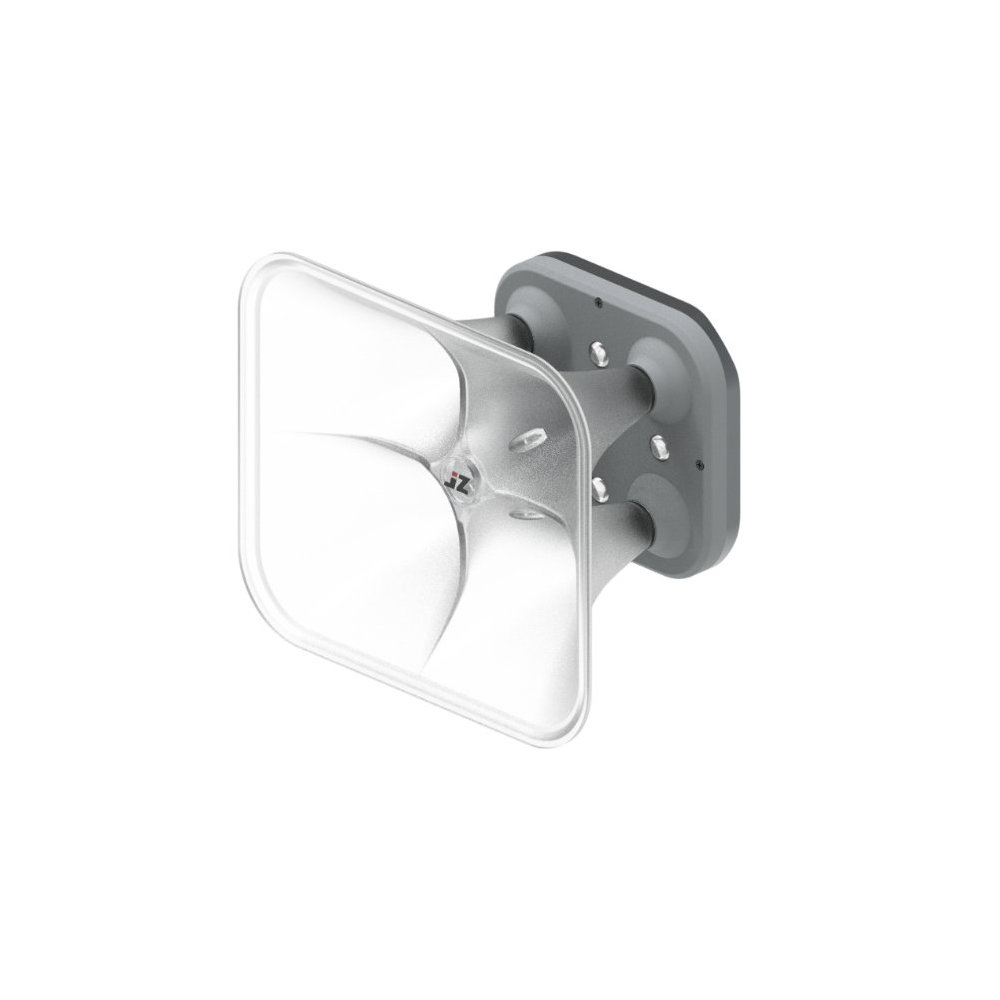
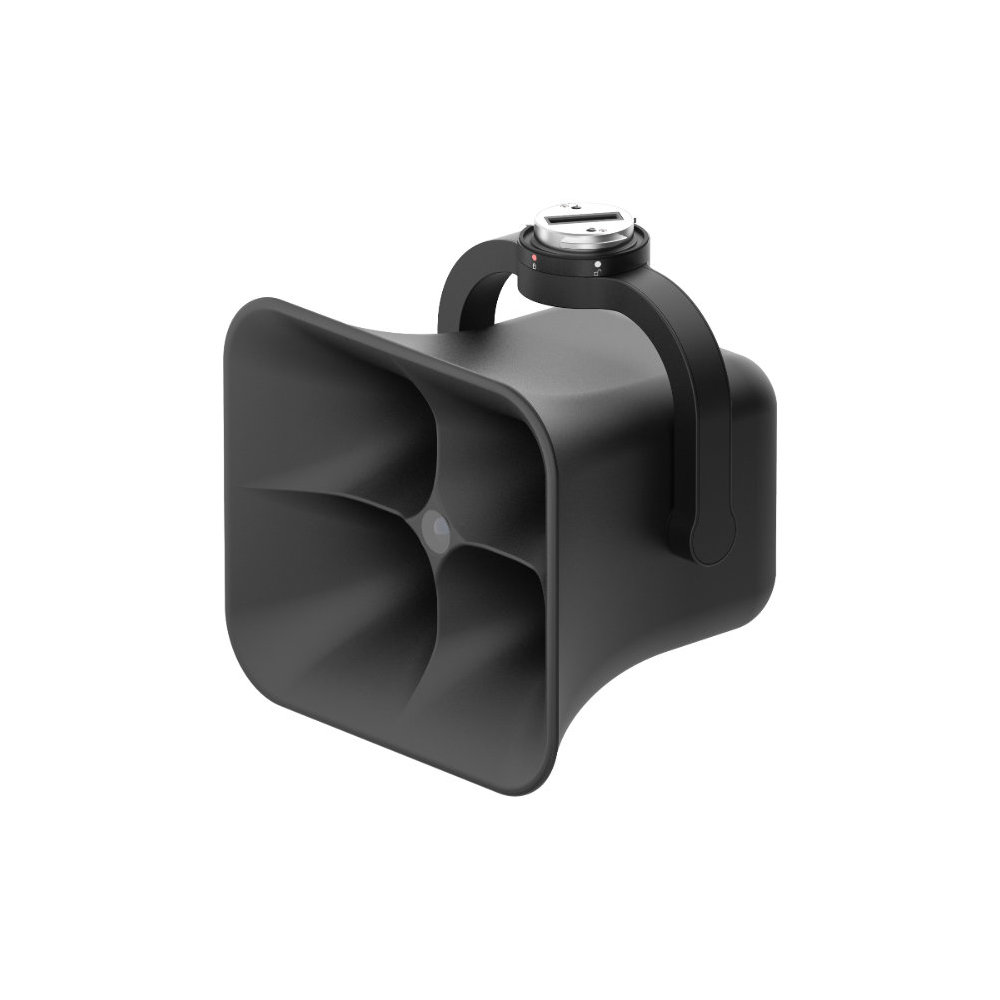
- Quad compression drivers: Professional-grade output. The four-driver array delivers full-bodied voice projection that cuts through wind and ambient noise at 500m+.
The driver count directly correlates with voice clarity at range. A quad-driver speaker doesn't just get louder — it preserves the intelligibility of every syllable.
2.4 Control Interface
How you actually operate the speaker matters as much as the hardware:
DJI Pilot 2 integration — Seamless DJI ecosystem workflow.
4G handheld microphone — Real-time duplex voice from anywhere.
WeChat Mini Program / Web app — Remote operation without dedicated hardware.
Pre-recorded audio playback (MP3/WAV) — Standardized announcements, multilingual messages.
The best systems support multiple control paths simultaneously. An operator in the command center can type a TTS message via a web dashboard while a field officer speaks live through a 4G handheld mic — both routing through the same airborne speaker.
2.5 Alert Features (Strobe Light)
A voice from the sky grabs attention. A voice with synchronized multi-color strobe lighting commands it. RGB strobe LEDs — supporting red, blue, green, yellow, and white — add a critical visual alert layer, especially useful at night, in smoke, or when addressing hearing-impaired individuals on the ground.
3. Matching Loudspeakers to Mission Profiles
Different missions demand different audio capabilities. Here's how to match speaker specs to real operational needs:
3.1 Search & Rescue (500m–1km coverage)
Requirements: Maximum range, high clarity, FPV camera for target identification, TTS for pre-recorded multilingual messages.
The quad-driver configuration with a 150mm large-aperture speaker head is ideal here. At 125–130 dB, these units project clear voice instructions over 500 meters — far enough to guide a rescue team or reassure a lost person while the drone maintains safe altitude. An integrated FPV camera lets the operator visually confirm the target and aim the audio precisely.
3.2 Law Enforcement & Tactical Patrol (300–500m)
Requirements: Compact, quick-deploy, multi-color strobe, both live voice and pre-recorded playback.
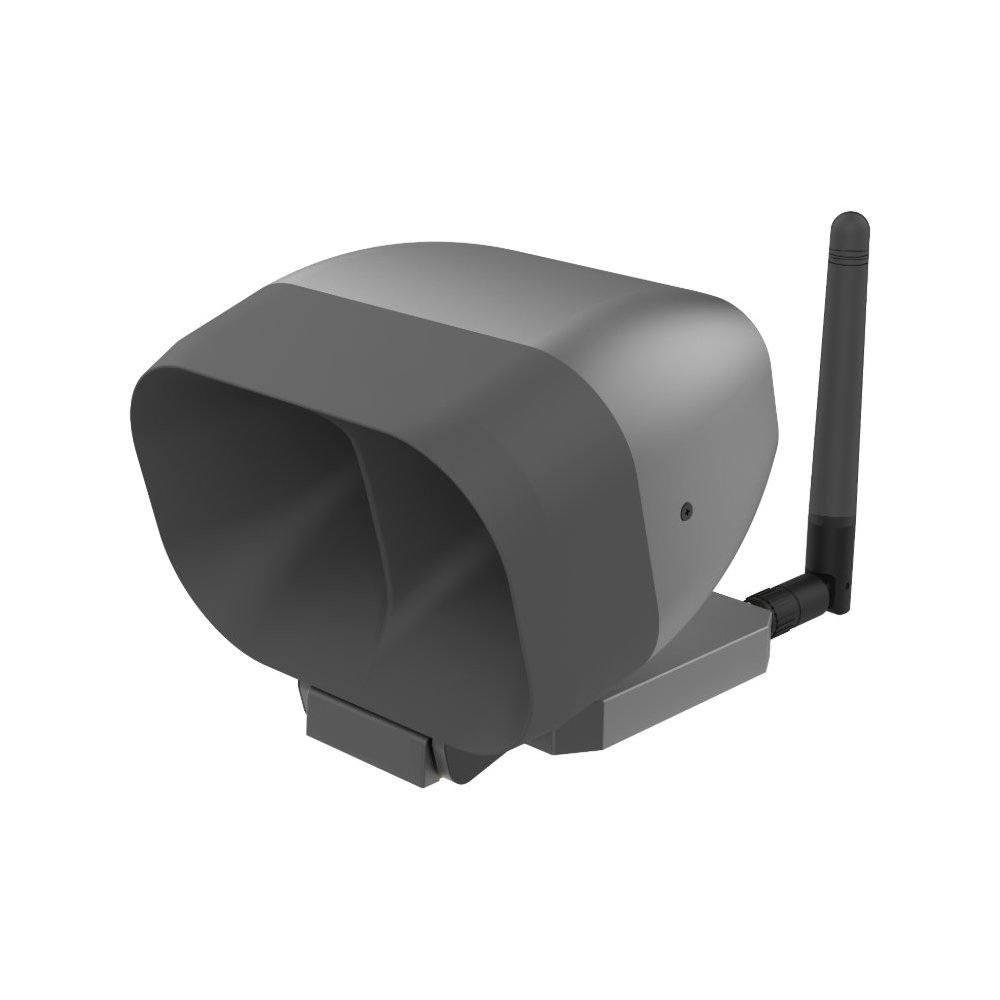
A dual-driver speaker in the 120dB range, weighing under 300g, fits this profile. The key feature is the combination of live microphone input AND text-to-speech. An officer can speak directly through a 4G handheld mic while the drone hovers, or play a standardized warning message in multiple languages via TTS. The RGB strobe's red/blue flash pattern reinforces authority visually.
3.3 Crowd Management & Event Security (300–500m)
Requirements: Highest SPL possible, multi-language TTS, pre-recorded messaging.
This is where 130dB quad-driver units earn their place. Crowd noise — cheering, traffic, sirens — creates a high ambient noise floor. A 130dB speaker at 100m altitude still delivers ~75-80dB at ground level, equivalent to a loud conversation. The ability to switch between pre-recorded messages in English, Chinese, Arabic etc. without re-recording is critical for international events.
3.4 Compact / Rapid-Deployment Operations (100–300m)
Requirements: Ultra-light, mounts on Mavic 3 or M30, simple control via app.
At ~265g with DJI SDK integration, compact speakers let smaller drones carry voice capability without sacrificing flight time. These are ideal for quick-response scenarios — a police M30 can be airborne with speaker and camera in under 2 minutes, delivering real-time instructions to a specific street corner while the ground team is still en route.
4. Drone Compatibility: Get This Right or Nothing Works
The most common purchasing mistake? Buying a speaker with the wrong electrical interface. DJI enterprise drones use two main payload connection standards:
DJI SkyPort V2/V3 — Found on M300 RTK, M350 RTK. Open standard, widest third-party support, hot-swappable.
DJI PSDK (E-Port) — Found on M30 Series, Mavic 3 Enterprise, M400. Lighter, requires adapter for some payloads.
Critical check: M30 series speakers can often work on M350 via a PSDK quick-release adapter bracket. If you operate mixed fleets, look for speakers that support both platforms through adapters.
5. Comparison Table: Entry-Level to Professional
Driver count: Compact: Single or dual | Mid-Range: Dual compression | Professional: Quad compression
SPL @ 1m: Compact: 110–120 dB | Mid-Range: 120 dB | Professional: 125–130 dB
Weight: Compact: 100–300g | Mid-Range: 150–300g | Professional: 550–700g
Strobe light: Compact: Optional RGB | Mid-Range: RGB multi-color | Professional: RGB + FPV camera sync
Control: Compact: DJI Pilot 2 / App | Mid-Range: Pilot 2 + 4G mic | Professional: Pilot 2 + 4G mic + Web + WeChat
TTS multilingual: Compact: Basic | Mid-Range: Yes | Professional: Yes + dialect support
Audio storage: Compact: None or limited | Mid-Range: 32GB internal | Professional: 32GB + USB upload
Typical mounting: Compact: Direct M30/E-port | Mid-Range: SkyPort V2/V3 | Professional: SkyPort + gimbal stabilization
6. Summary: Start With Your Drone, Then Match the Mission
There is no single "best" drone loudspeaker — only the right one for your aircraft and use case. The decision framework is simple:
- Check your drone's interface — SkyPort, E-Port, or both via adapter? Eliminate anything that won't physically connect.
- Weigh your payload budget — How many grams can you spare after accounting for the camera, battery, and bracket?
- Match SPL to mission range — 120dB for 300m coverage, 130dB for 500m+. Don't under-spec this.
- Choose control method — If your team uses DJI Pilot 2 exclusively, stick with native integration. If you need remote operation from a command center, require 4G + web/WeChat access.
- Add visual alert if needed — For night ops or noisy environments, an RGB strobe with synchronized flash patterns adds a layer of communication that audio alone cannot match.
A well-chosen loudspeaker payload transforms your drone from an observation platform into an active communication node — and in public safety, search and rescue, and disaster response, that capability saves lives.
Looking for a loudspeaker payload that matches your specific drone and mission? Contact us for a tailored recommendation based on your aircraft type and operational requirements.