Why Some Drone Strobe Lights Look Bright But Aren't Safe
Updated: July 12, 2026
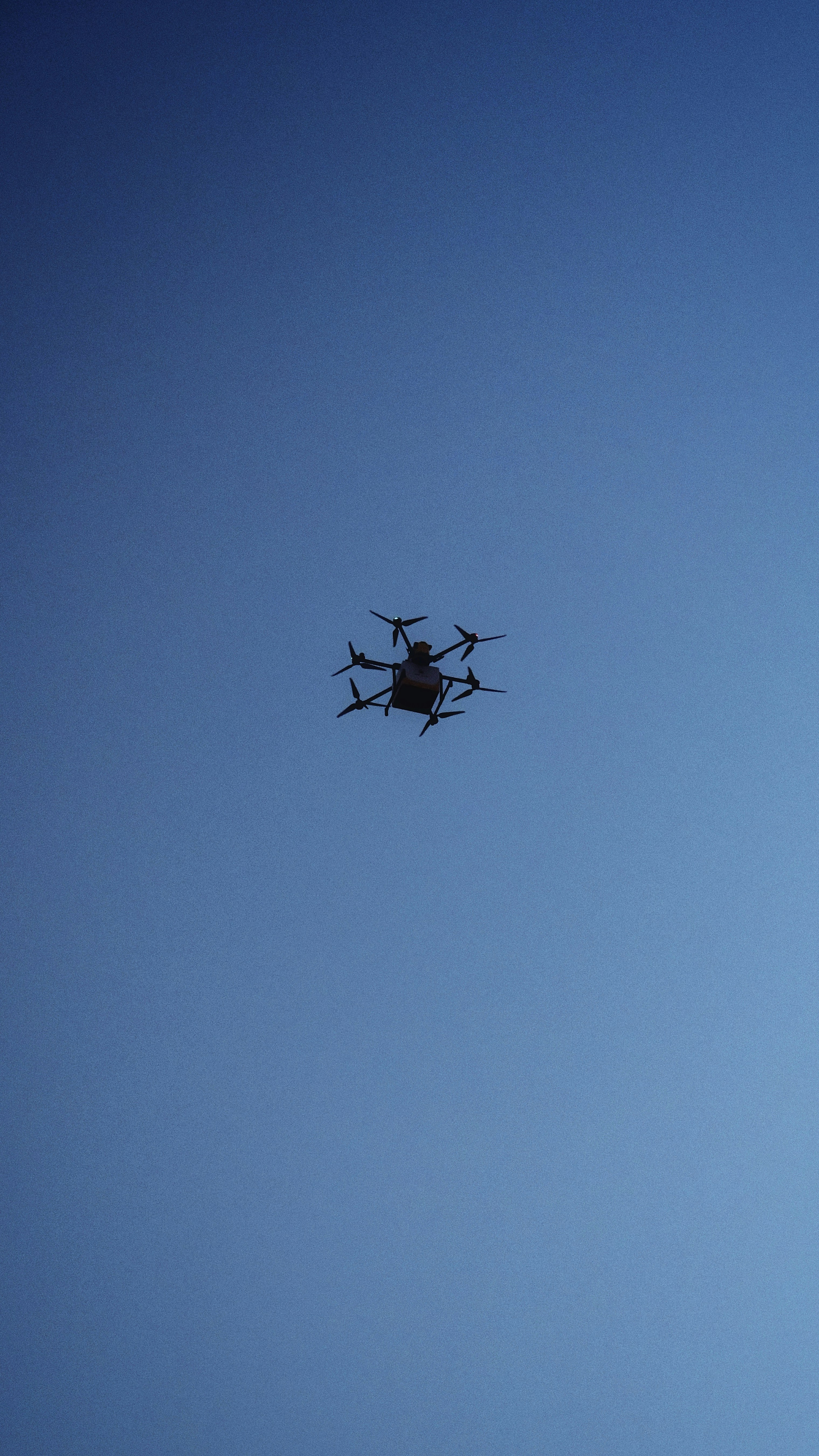
Why Some Drone Strobe Lights Look Bright But Aren't Safe An operator launches a Matrice 350 RTK at dusk for a power line patrol. The drone strobe light appears blindingly bright on the ground—almost uncomfortable to look at. But at 200 meters, the pilot loses visual contact. The light is a diffuse glow, not a focused warning beacon. Another aircraft enters the same airspace; the pilot never sees the drone. This scenario is more common than most procurement managers realize. Brightness measured i
Why Some Drone Strobe Lights Look Bright But Aren't Safe
An operator launches a Matrice 350 RTK at dusk for a power line patrol. The drone strobe light appears blindingly bright on the ground—almost uncomfortable to look at. But at 200 meters, the pilot loses visual contact. The light is a diffuse glow, not a focused warning beacon. Another aircraft enters the same airspace; the pilot never sees the drone. This scenario is more common than most procurement managers realize. Brightness measured in raw lumens does not equal safety. The critical distinction lies between warning/alert lights and illumination lights, and understanding this difference is essential for any enterprise UAV operation.
The Difference Between Warning Lights and Illumination Lights
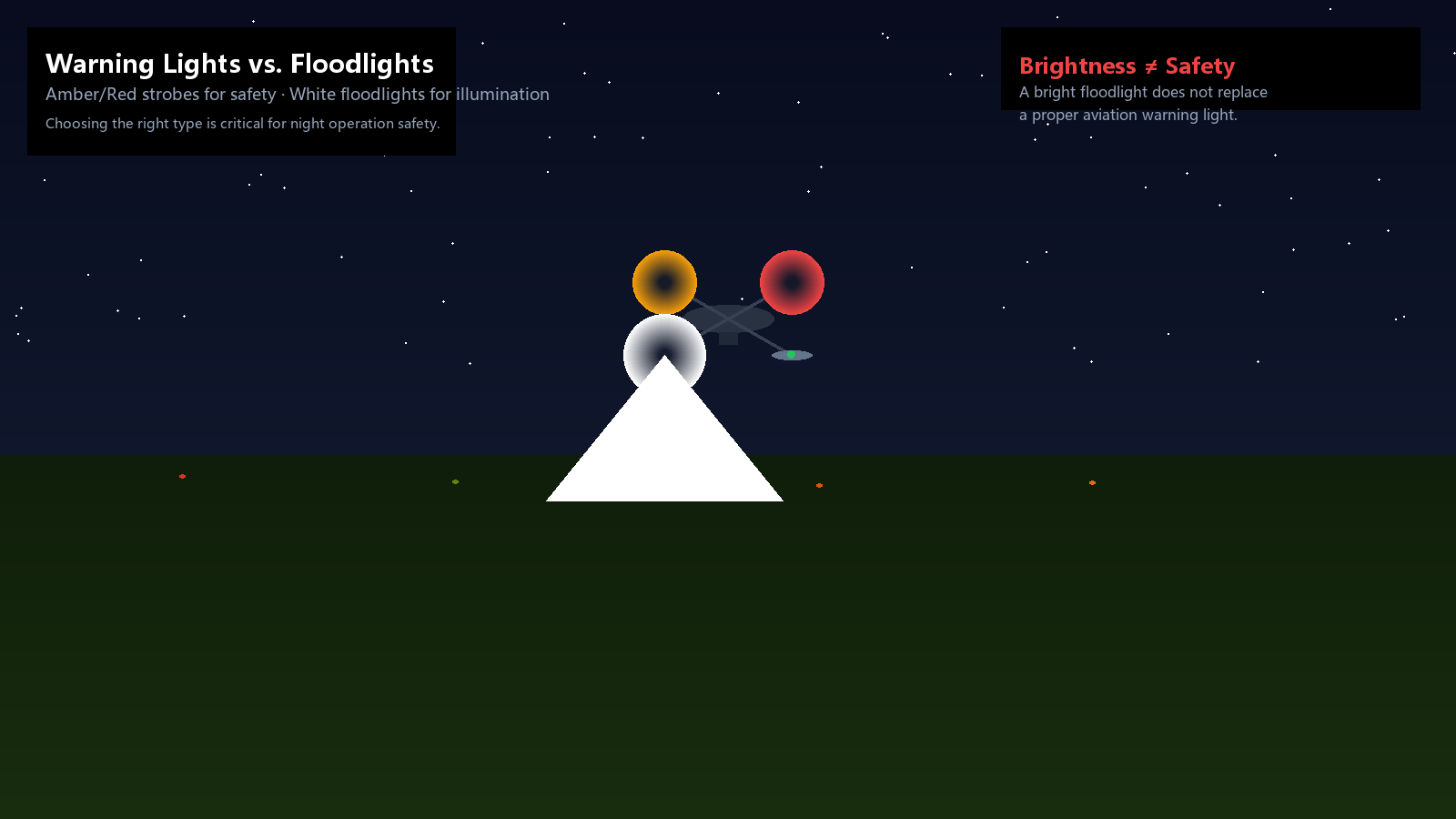
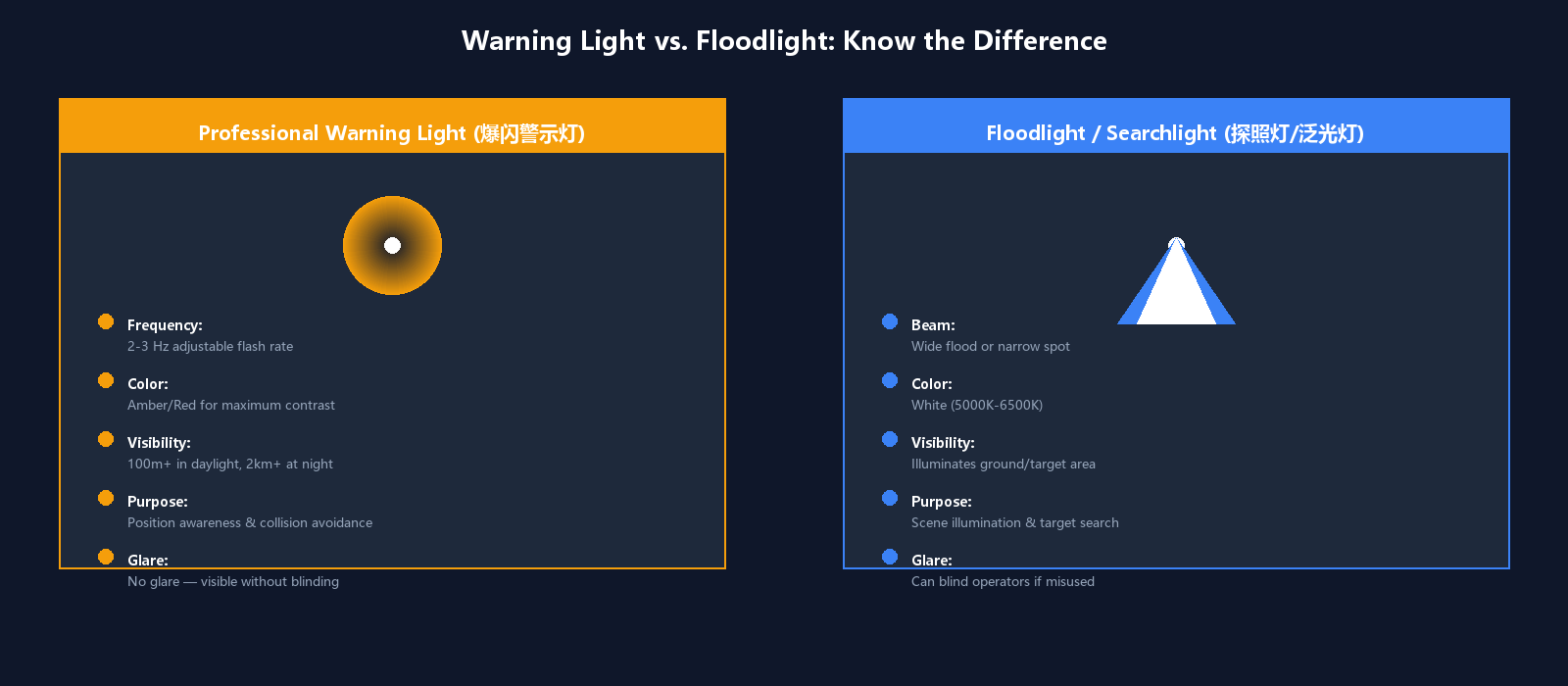
A drone strobe light designed for warning serves one primary purpose: to make the aircraft visible to other airspace users from all angles, at distance, and under varying ambient light. These lights prioritize flash frequency, color contrast, and beam angle over sheer output. In contrast, an illumination light—such as a drone searchlight—is designed to light up a ground target, providing usable lux at a specific distance.
Mixing these two functions leads to unsafe outcomes. A high-lumen floodlight used as a warning light may wash out the drone's silhouette, making it harder to track. Worse, it can cause glare for other pilots or ground personnel. Professional-grade warning lights, like the S3 Strobe Light (single unit 40g, 25W, 90° beam angle) or the S3 PLUS Strobe Light (four light banks, 1 km visibility), are engineered with specific flash patterns (1–25 Hz adjustable) and multi-color options (red, green, blue, yellow, white) to ensure the drone is seen, not just lit up.
Key Safety Features of Professional Drone Strobe Lights
Flash Frequency and Pattern
A steady or slow-blinking light is easily lost against a cluttered background. The AF1 Audio-Visual Alarm (23g, 90° beam angle, 1–25 Hz flash frequency) and the S3 Mini Multi-color Warning Light (65g, 10W, 90° beam angle) both support adjustable flash rates up to 25 Hz. This rapid strobing creates a distinct visual signature that the human eye detects faster than a constant glow.
Color Selection and Contrast
Not all colors are equally visible in all environments. A night red flashing light is highly effective against dark skies but may blend into sunset or urban lighting. Multi-color capability—red, green, blue, yellow, white—allows operators to switch based on background. The DS4 Warning Screen (240g, 1024 independent LEDs, 120° beam angle) and the DS16 Warning Screen (1550g, 4096 LEDs, 52-inch display) offer both strobe and text-based warnings, with dual-color alternating flash modes for maximum contrast.
Glare-Free Design and Beam Angle
A wide beam angle (90° to 120°) ensures the light is visible from multiple approach vectors without creating a blinding hotspot. The S3 Strobe Light and S3 PLUS both feature a 90° beam angle. The DS4 and DS16 offer 120° coverage. This design philosophy prevents the light from acting as a spotlight that only illuminates the drone's belly.
Scenario-Specific Requirements
Power Line Inspection
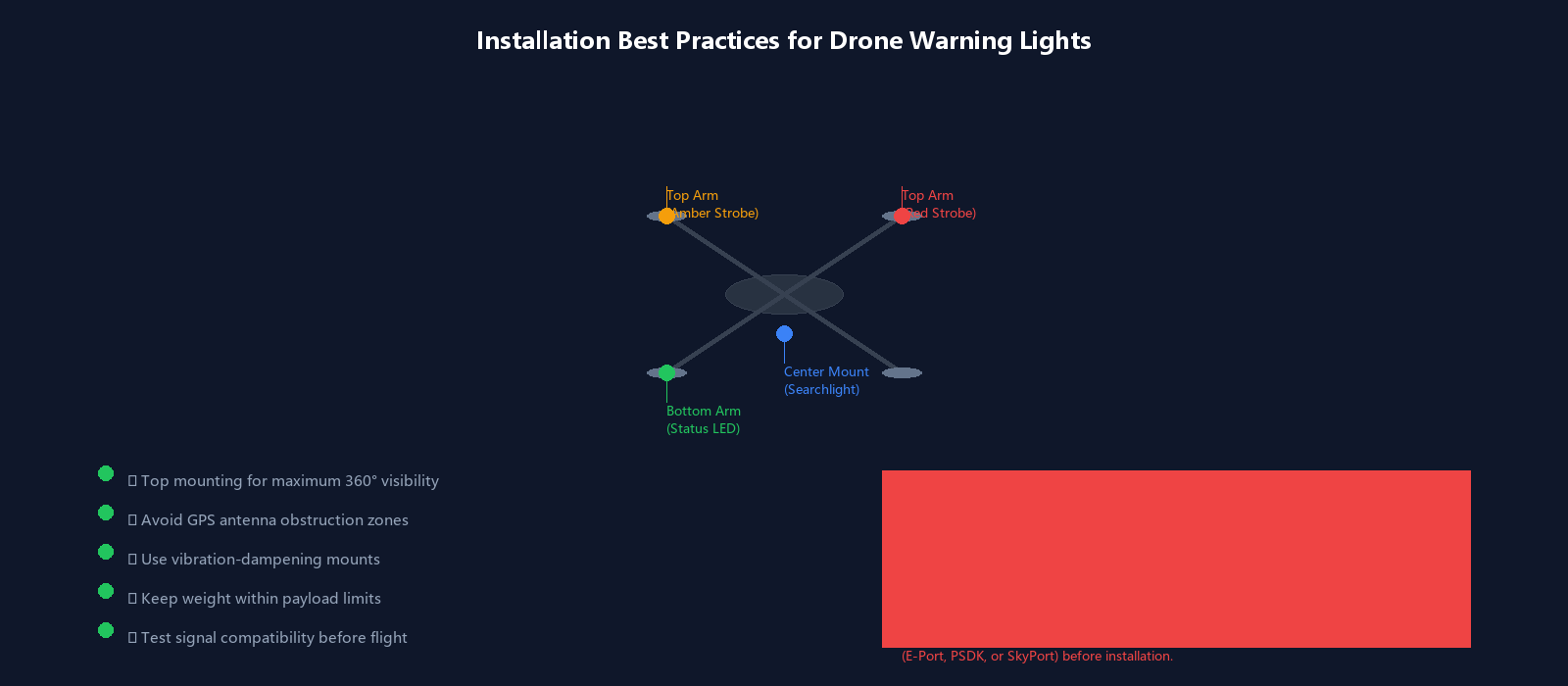
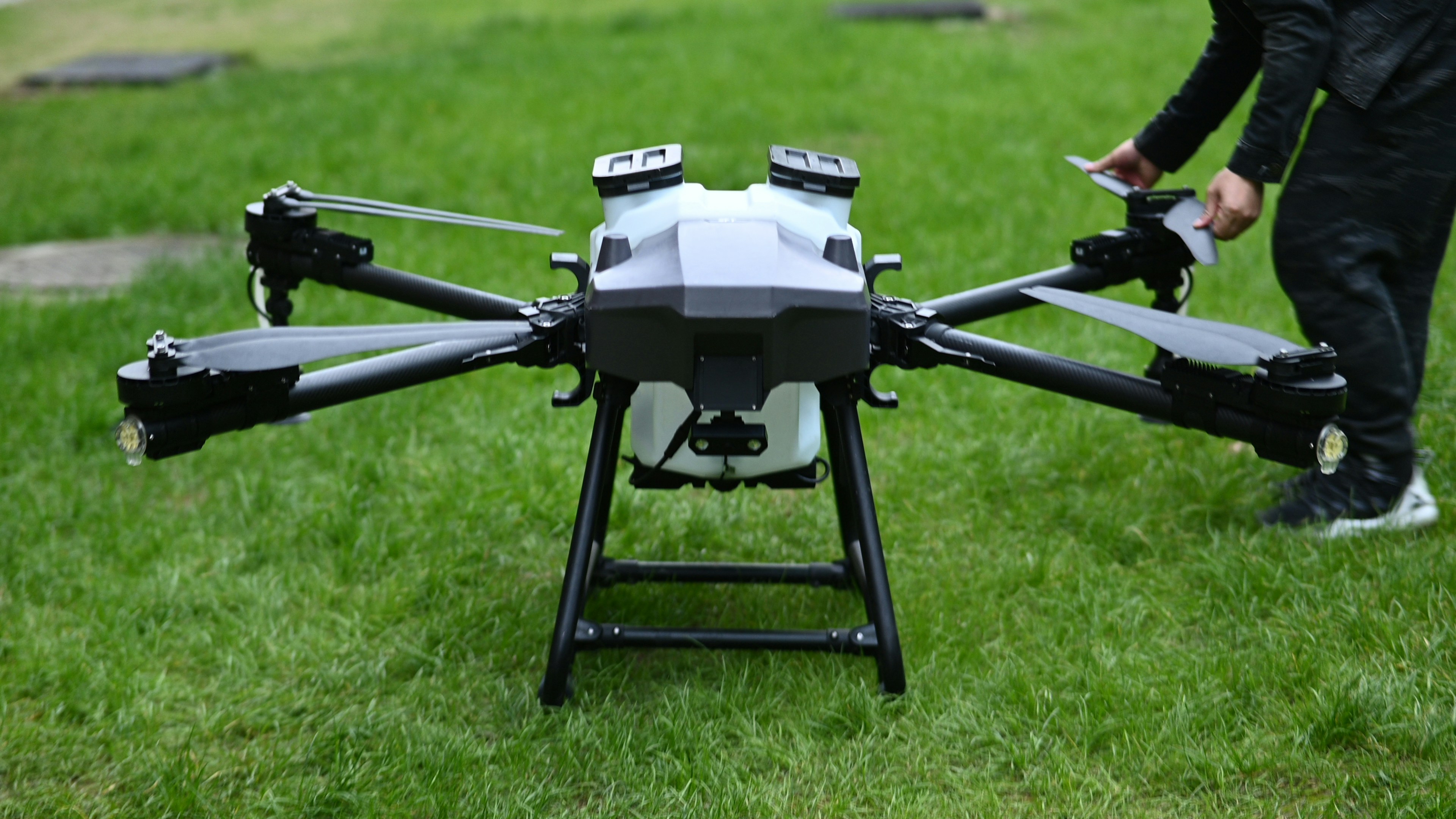
Operators need a drone warning light that is visible against high-contrast backgrounds (sky vs. vegetation) and does not interfere with the pilot's view of the lines. The S3 Strobe Light (single unit 40g) can be mounted on the arms of a Matrice 350 RTK, providing 360° coverage without adding significant weight. For night operations, a night red flashing light mode preserves the operator's dark adaptation.
Agriculture and Crop Spraying
Low-altitude flights over fields require a light that ground personnel can see from any angle. The AF1 Audio-Visual Alarm (1000m visible distance, 100m audio alert) combines visual and audible warnings. Its 90° beam angle ensures the drone is visible even when banking during spray passes.
Film and Cinematography
In this context, the light must not contaminate the scene. The S3 Mini Multi-color Warning Light (65g, 10W) can be set to a low-intensity white or yellow flash, providing safety without ruining a take. Its compact size (109 x 29 x 12 mm) allows discreet mounting.
Search and Rescue (SAR)
SAR missions often require both warning and illumination. The T90 Searchlight (475g, 13400 lm, 15° beam angle) provides high-intensity illumination for ground search, while the H150A Acoustic-Optical Speaker (390g, 130dB siren, 1000m visible strobe) combines a powerful speaker with multi-color strobe for coordinated team signaling.
Border Patrol and Security
Long-range visibility is critical. The DS16 Warning Screen (1550g, 200m text warning distance, 1000m strobe visible distance) can display custom text warnings in multiple languages, while its strobe function alerts distant observers. The LD5 Laser Projector (900g, 5W laser, 100m+ projection distance) can project symbols or text onto the ground for ground teams.
Installation, Signal Interference, and Mounting Considerations
All our strobe lights and warning devices are designed for direct integration with DJI Matrice-series platforms via PSDK, E-Port, or SkyPort. The S3 Strobe Light uses a snap-on quick-release mount compatible with M350 RTK, M300 RTK, and M30. The S3 PLUS and S3 Mini use similar mechanisms for Matrice 400 and Matrice 4D series.
Signal interference is a non-issue with these payloads. They operate on dedicated power lines and communicate via DJI's SDK protocol, not RF bands that could conflict with the drone's control link. The AF1 Audio-Visual Alarm uses Type-C for power and control, while the DS4 and DS16 communicate via PSDK, ensuring clean data transmission.
Weight distribution matters. A single S3 Strobe Light weighs 40g; a full set of four adds 160g—negligible for a Matrice 350 RTK. The S3 PLUS at 137g per unit is still well within payload limits. For larger displays like the DS16 (1550g), ensure the drone's center of gravity is adjusted.
Maintenance and Long-Term Reliability
Industrial drone strobe lights must withstand vibration, temperature extremes, and moisture. The S3 Strobe Light operates from -10°C to 50°C and stores from -20°C to 60°C. The AF1 is rated IP4X, while the DS4 and DS16 are designed for continuous outdoor use. The T90 Searchlight includes a high-speed cooling fan that adjusts based on load temperature, preventing thermal degradation during extended illumination.
Regular inspection of the lens and housing for cracks or moisture ingress is recommended. The S3 Mini and S3 PLUS use sealed LED arrays that require no user maintenance. For the DS16, the 4096 LED array is rated for 50,000 hours of operation.
Frequently Asked Questions
Q: Can I use a drone searchlight as a warning light?
No. A drone searchlight like the T40 Searchlight (95.6g, 40W, 14° beam) is designed to illuminate a specific ground target. Its narrow beam and high intensity create glare and do not provide the 360° visibility required for airspace warning. Always use a dedicated drone strobe light with a wide beam angle (90° or more) for warning purposes.
Q: What is the best color for a night red flashing light?
Red is effective against dark skies because it preserves the pilot's night vision and has a longer wavelength that scatters less in haze. However, in urban environments with red ambient lighting, yellow or white may provide better contrast. Multi-color lights like the S3 Strobe Light allow you to switch based on the mission environment.
Q: Are solar drone warning lights reliable for industrial use?
Solar-powered lights are generally unsuitable for industrial drone operations. They cannot guarantee consistent brightness in low-light conditions or during extended flights. All our strobe lights are powered directly from the drone's battery via DJI SDK or E-Port, ensuring full brightness throughout the mission.
Q: How do I choose between the S3, S3 PLUS, and S3 Mini?
The S3 Strobe Light (40g, 25W) is ideal for M350/M300/M30 platforms where weight is critical. The S3 PLUS (137g, four light banks) provides higher output for Matrice 400. The S3 Mini (65g, 10W) is designed specifically for the Matrice 4D series via E-Port Lite. Choose based on your drone model and required visibility range.
Conclusion
Brightness measured in lumens is a poor proxy for safety. A true drone strobe light must deliver the right flash frequency, color contrast, and beam angle to make your aircraft visible from all directions. Whether you need a lightweight S3 Mini for a Matrice 4D, a high-output S3 PLUS for a Matrice 400, or a combined audio-visual system like the AF1, our payloads are engineered for real-world industrial operations.
Contact our team to discuss your specific mission requirements and get the right drone warning light for your fleet.