Zoom vs Fixed-Focus Gimbal: How Far Can Optical Zoom Really See?
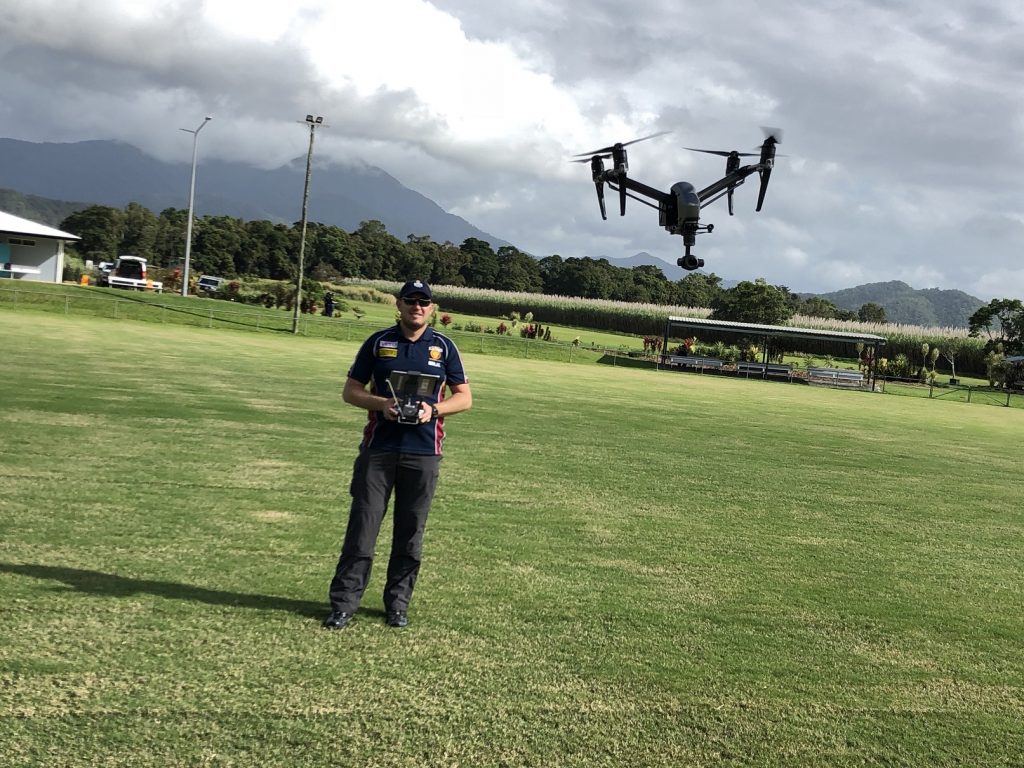
Inspection and security missions have one sentence that hurts the most: "The drone is there. But I can't see."
Hot cells on solar panels, corrosion on transmission towers, a face at the fence line — those details ARE the mission. If the lens cannot reach them, flying closer wastes time and burns risk; fly too close and you may be spotted, or hit something. The question "zoom or fixed-focus?" is really asking: how small a detail do you need to see, from how far away?
This article breaks down the difference between zoom and fixed-focus gimbals, how recognition distance really works, and how to choose between our zoom (CGTT/CGTF) and fixed-focus (CGTD) lines.
Zoom vs Fixed-Focus: The Lens Decides
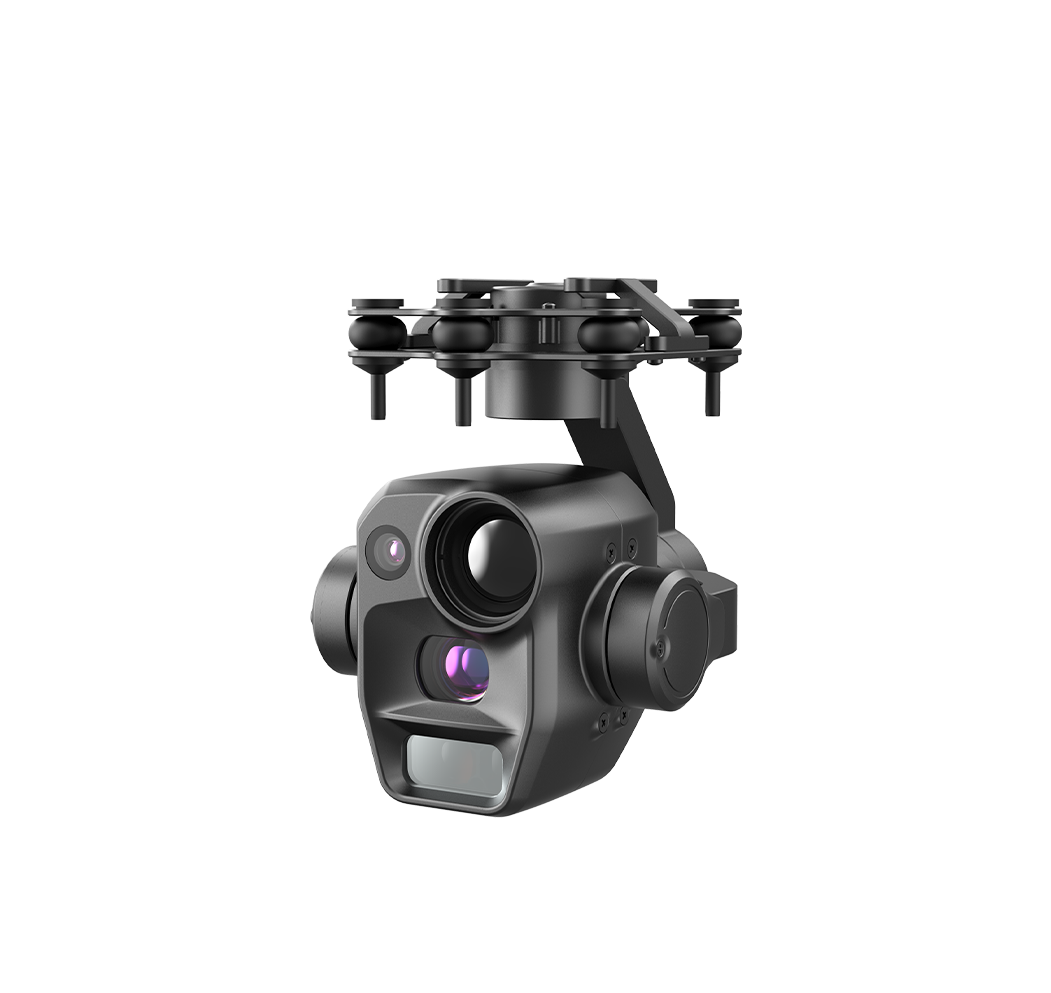
A fixed-focus gimbal has a fixed focal length — the field of view is fixed, and details stay the same size no matter what. To see far-away details, the aircraft has to fly closer.
A zoom gimbal changes its focal length continuously — the field of view narrows or widens on demand, pulling distant details close without the aircraft getting near.
Think of it as a fixed telescope versus an adjustable one. Zoom sounds like the obvious winner — except zoom lenses are heavier, pricier and more complex, and "pulling closer" is not the same as "still sharp when pulled."
The number that actually decides results is recognition distance.
Recognition Distance Is the Real Metric: Zooming Is Not Seeing
"Magnifying" and "recognizing" are two different things. Push magnification too far and the image falls apart — distance and zoom factor stop mattering. So judge a gimbal not by how many "X" it claims, but by the distance at which it can still identify a target.
Measured specs from our own line:
| Gimbal | Optics | Daytime recognition | Night recognition |
|---|---|---|---|
| Fixed CGTD070A (13MP + 640×512 thermal) | Fixed FOV | — | 120 m (thermal) |
| Fixed CGTD070B (2MP starlight + 640×512 thermal) | Fixed FOV | 250 m | 120 m |
| Fixed CGTD090 (50MP + 640×512 thermal) | Fixed FOV | 350 m | — |
| Zoom CGTT170 (50MP + thermal telephoto + laser) | Thermal telephoto | — | 300 m |
| Zoom CGTT215 (50MP + 48MP zoom + thermal) | 120X hybrid zoom | 1500 m | Thermal-assisted |
| Zoom CGTF270 (quad-sensor, 120X hybrid zoom) | 120X hybrid zoom | 1500 m | 300 m |
See the gap? At the same class, a zoom gimbal's daytime recognition distance is 4x that of fixed-focus. Details visible at 1500 m force a fixed-focus platform to fly inside 350 m — in law enforcement, border and energy settings, that extra kilometer of standoff can be the difference between mission success and failure. Power line inspection is the classic case: a zoom gimbal paired with AI defect detection reads insulator and fitting detail from a safe standoff, cutting hours of manual frame-by-frame review — the full workflow is in our power line inspection guide.
What 120X Hybrid Zoom Actually Is: Optical Foundation, Digital Boost
Many customers ask: is "120X" real optical zoom?
Strictly, it is hybrid zoom: the optical stage does the real, quality magnification (no detail loss), and the digital stage extends beyond it using interpolation. On the CGTT215, the zoom camera is a 48MP continuous optical zoom (FOV from 22.6° down to 7.2°), and digital zoom layers on top to reach 120X.
In plain words: optical is "real magnification", digital is "emergency magnification." In good daylight, 120X hybrid zoom still recognizes detail at 1500 m; at night, the thermal channel takes over (CGTF270: 300 m night recognition).
Rule of thumb when comparing: ignore the marketing multiplier. What matters is the "optical zoom range" and the "recognition distance." A spec sheet that only lists "XXx zoom" without recognition distance is almost certainly padding with digital zoom.
Fixed-Focus or Zoom: How to Decide
No hedging, here is the answer:
Choose fixed-focus (CGTD series) if: - Your working distance is fixed and the aircraft can fly close (e.g. inspection within 300 m) - Weight is critical — fixed-focus is lighter (e.g. the 104 g CGTD095 vs heavier zoom gimbals) - Budget comes first; fixed-focus offers better value - Your primary sensor is thermal; visible is only for evidence
Choose zoom (CGTT/CGTF series) if: - You must see details from a safe standoff (enforcement, counter-terrorism, borders, power corridors) - Working distance varies — near one day, far the next (site patrols, evidence capture) - You want fewer flights: one sortie, zoom in, done — no shuttling back and forth - You need the full "wide search + telephoto lock" chain
One-liner: flying closer costs money and risk. Zoom trades "flying close" for "zooming close" — for the missions you do not want to get near.
Picking the Right Model
| Model | Positioning | One-line take |
|---|---|---|
| CGTD070A/B | Fixed + 640×512 thermal | 120 m night recognition, the value inspection pick |
| CGTD090 | 50MP fixed + thermal | 350 m daytime, richest detail |
| CGTT170 | 50MP + thermal telephoto + 1200 m laser | 300 m night, search & rescue and night enforcement |
| CGTT215 | 50MP + 48MP zoom + thermal | 120X hybrid zoom, 1500 m daytime — the zoom workhorse |
| CGTF270 | Quad: wide + zoom + thermal + laser | 1500 m day + 300 m night — all-round flagship |
Not sure? Start by measuring your longest working distance. If you mostly fly inside 500 m, fixed-focus is enough. The moment you have a 1 km+ detail requirement, go zoom — that line is more real than any spec sheet.
Three Common Traps
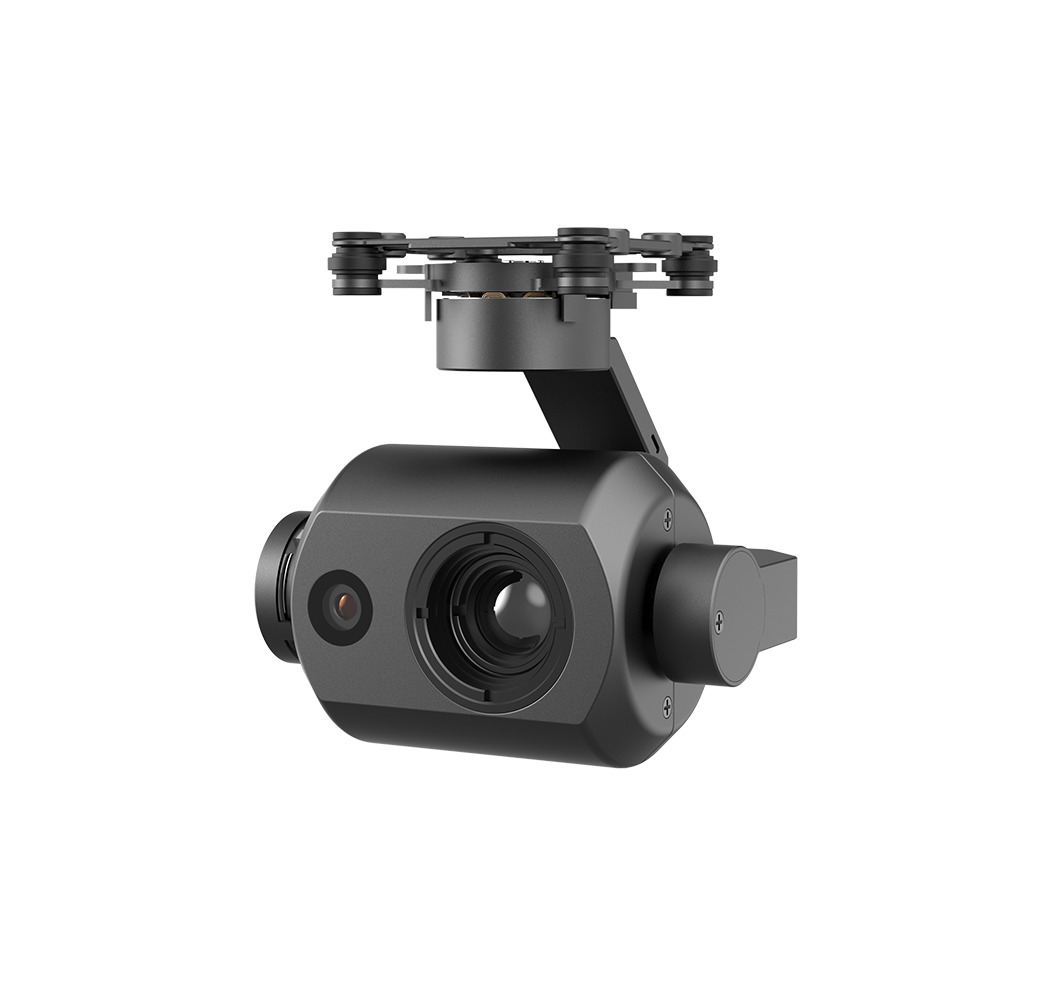
Trap one: bigger zoom number is always better. A "100X" built on digital zoom means nothing. Look only at "optical zoom" and "recognition distance."
Trap two: fixed-focus is outdated. Its stability and weight advantages are real in close-range work (CGTD095: 104 g, stabilization ≤0.02°). Choose by mission, not by how new the tech sounds.
Trap three: zoom always weighs much more. Micro zoom gimbals have slimmed down. If you are unsure about weight, send us your airframe and let us run the payload math instead of guessing. A zoom gimbal also stacks with AI tracking — lock the target and it pulls itself in, see our AI tracking gimbal guide.
Wrapping Up
Zoom vs fixed-focus in one line: if fixed-focus covers your distance, take it; if you need to "see far", take zoom. Recognition distance is the hard metric, optical zoom is the key spec, and the marketing multiplier is only a reference.
Not sure which gimbal fits your missions? Send us your working distances, target types (people / vehicles / hot spots / corrosion) and airframe model. Our technical team will reverse-engineer the selection from recognition distance and put together a gimbal configuration. Use the chat button in the corner or drop an inquiry — compatibility answer within one business day.