AI Tracking Gimbal Explained: Lock On, Track, and Get Your Hands Back
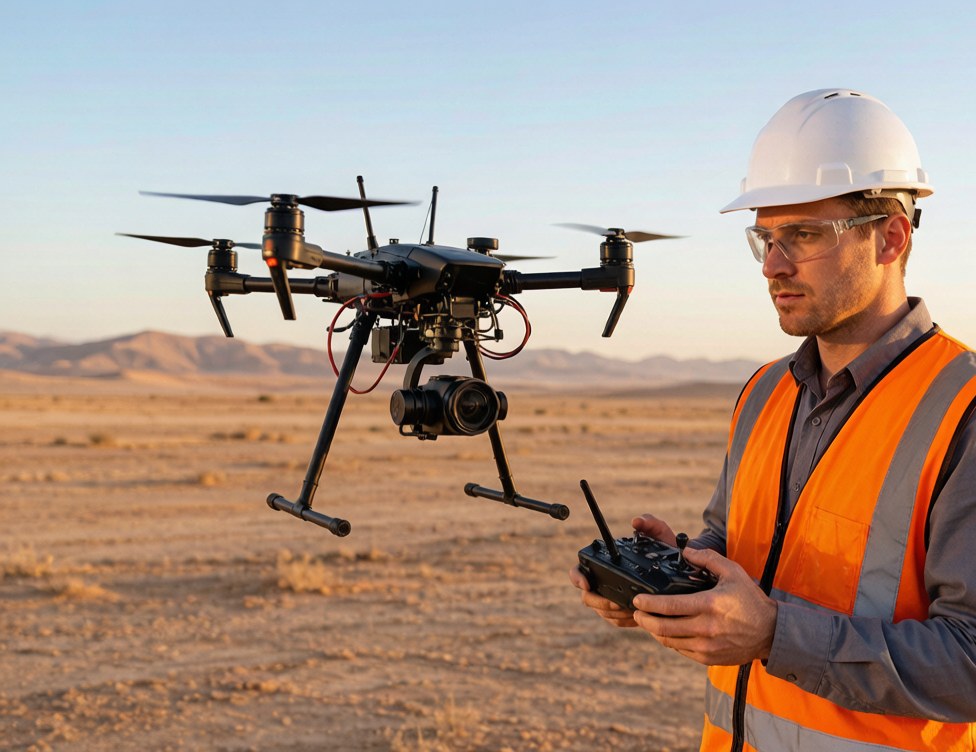
Ask any drone pilot who has worked law enforcement, security or inspection missions, and they will tell you the hard part was never flying the aircraft. It was keeping the target in frame.
I have watched this scene play out too many times: one hand on the controller, eyes locked on the screen, thumb trembling over the sticks while the operator shouts target bearings — the target makes one hard turn, the camera whips past, and it takes another fifteen seconds to find it again. In a pursuit or a rescue, fifteen seconds is enough for the target to clear two walls.
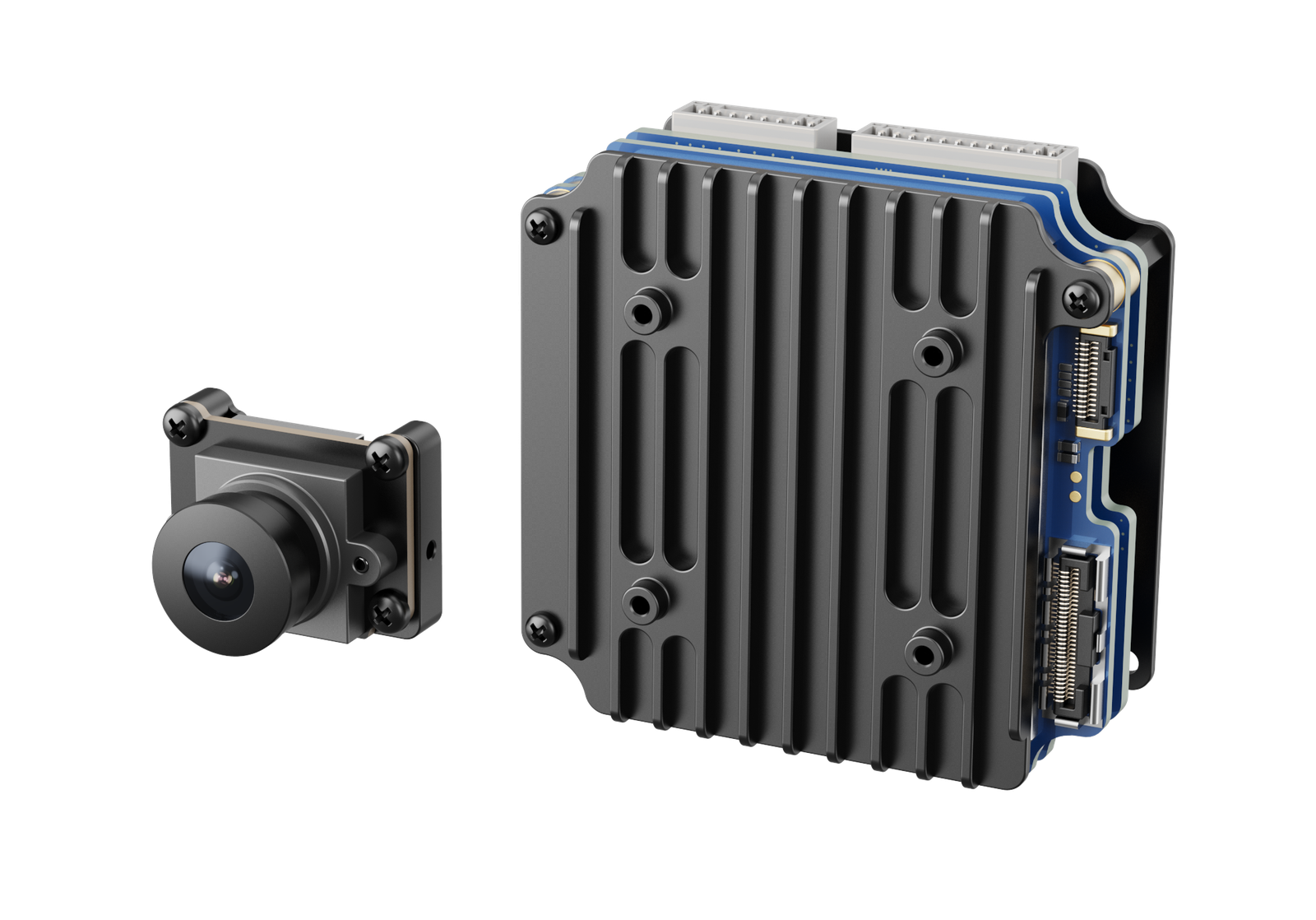
An AI tracking module does one plain thing: you box the target, the gimbal follows it on its own. The operator gets their hands back — for the route, the radio, the next decision. This article breaks the whole thing down: how it works, what specs actually matter, and how to pick among our five CPDD075 modules.
Why You Need It: What Manual Tracking Really Costs
Take a night perimeter patrol. The drone spots someone climbing the fence. Right now the operator has to do three things at once: keep the target inside the frame with the gimbal, hold the aircraft attitude, and predict where the subject runs next.
Sounds manageable on paper. Fly it for real and you know the truth — with those three things stacked, hands get busy fast, and anyone who holds a clean track for five minutes straight is having a good night.
The limits of manual tracking are not something you train your way out of. They are structural:
- You react half a second late. The target turns hard, and between "seeing it" and "correcting the stick" there are 0.3–0.5 seconds of human latency. Once the camera loses the target, re-acquiring takes even longer — by then the subject is gone.
- You only have two hands. Tracking while managing flight and comms means the sticks get neglected, framing drifts, and the aircraft flies sloppy.
- You get tired. Staring at a screen for hours wears anyone down, and night missions make it worse. Fatigue is when misjudgments start lining up.
An AI tracking module takes "gimbal servo" out of human hands: recognition, framing and following are automated. The operator keeps two decisions — who to lock, and where to fly.
How It Works: The Plain-English Version
No magic here. It is a three-step loop that runs over and over:
- Recognize. The visible or thermal frame goes through an AI model, which outputs a bounding box around the target — a vehicle, a person, an animal.
- Center it. The gimbal sees the target drift, calculates exactly how much pitch and yaw to correct, and drags the target back to the center of the frame.
- Don't let go. If the target ducks behind a tree, leaves the frame, or accelerates suddenly, the algorithm keeps predicting its position and re-engages the moment it reappears.
Here is the analogy that sticks: it is a hunting dog — the AI is the eyes, the gimbal motor is the legs, and no one needs to shout commands. The teamwork is automatic. Your only job is to point and say "that one."
Three details that never show up in a spec sheet, but decide whether it works in the field:
- Search first, then lock. Good modules work as a "wide search + telephoto lock" pair: find the target in the wide frame, switch to telephoto and hold it. A single-focal-length module either can't find it or can't hold it — worst of both worlds.
- What it sees at night. Visible light is fine during the day and useless after dark. A module with thermal keeps tracking at night — that is the real difference between single and dual sensor.
- How steady the frame is. 2-axis stabilization (pitch + yaw) is the floor for AI tracking. With fewer axes, the image shakes so much during tracking that the algorithm starts dropping frames itself.
Four Things to Check When You Spec One
① Sensor combo — decides when and what you can track
| Combo | Good for | Shortfall |
|---|---|---|
| Single visible | Daytime, well-lit scenes | Dead at night and in low light |
| Visible + thermal | Day and night | Thermal resolution sets how far it sees at night |
| Tele + wide + thermal | Wide-area search and long-range lock | Heavier, hungrier on power |
② Weight and power draw — decides whether it fits your airframe
The module rides on the aircraft, and every gram eats into your endurance and payload margin. Micro modules at 10–70 g hang off FPV and light recon drones without a thought; dual/tri-sensor thermal modules at 35–43 g suit industrial multirotors. There is no universally "right" weight — there is only a weight that fits your payload budget. Do the math first, then pick.
③ Tracking capability — how wide it searches, how far it locks
Two numbers matter: the wide focal length (e.g. 1.75 mm — broad field, good for finding people) and the telephoto focal length (e.g. 16.26 mm — long reach, solid lock), plus the thermal resolution (256×192 / 384×288 / 640×512 — higher means it identifies people from farther away at night).
④ Stabilization axes and size — frame quality, and whether it fits
2-axis stabilization is the pass line. Size decides whether it physically fits your airframe — measure the space before you order, or you are in for a wasted round-trip.
The CPDD075 Series: How to Pick Among Five
Our own line runs a full gradient from ultra-light single sensor to dual/tri-sensor gimbals, all with measured specs:
| Model | Sensors | Key specs | Weight | Best for |
|---|---|---|---|---|
| CPDD075CW | Single visible | Wide 1.75 mm | 10 g | Light recon drones, rapid daytime deployment |
| CPDD075CLT | Visible + thermal | Tele 16.26 mm + 384×288 thermal | 35 g | Day/night patrol, night enforcement |
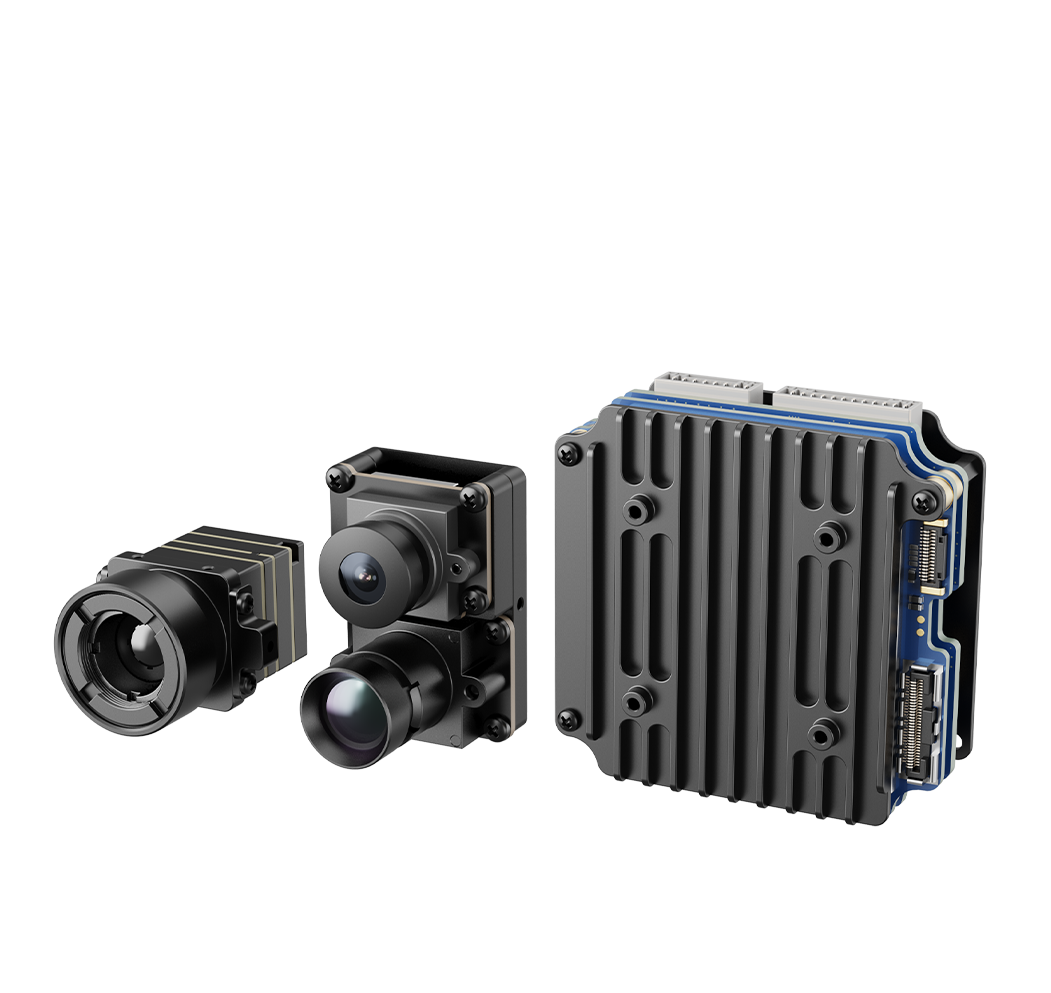
| CPDD075CCT | Tele + wide + thermal | 16.26 mm + 1.75 mm + 384×288 | 43 g | Complex missions: wide search + long-range lock |
| CPDD075S | Single visible, 2-axis gimbal | 2-axis gyro stabilization, 45×58×70 mm | 70 g | Light tracking where gimbal stability matters |
| CPDD075GT1/2/3 | Visible + thermal, 2-axis gimbal | 50MP wide + thermal in three tiers (256×192 / 384×288 / 640×512) | Gimbal-class | Inspection & security that demand thermal resolution |
Straight answers:
- Day-only work on a light airframe: CPDD075CW. At 10 g you will not notice it is there, and endurance barely moves.
- Need day and night: CPDD075CLT is the one most operators end up on — telephoto plus thermal covers night enforcement and perimeter patrol.
- Mixed missions, search and lock both: CPDD075CCT. Tri-sensor means the wide frame does not lose the target and the telephoto does not blur it.
- Serious about thermal, want to see farther: step up to CPDD075GT3 (640×512 thermal) — night identification range pulls clearly ahead, for more weight and more money.
In the Field: Four Missions, Four Pairings
Law enforcement & perimeter security. A night patrol picks up a subject, locks it on the thermal channel, pulls in with the telephoto for detail. Same playbook as our perimeter security drone setup guide — "AI tracking + searchlight": the tracking module holds the target, the searchlight lights it, the operator just commands. Machines watch machines, people command.
Power line inspection. Let the gimbal ride the insulators and fittings you are checking, pair it with AI defect detection, and you cut a lot of the manual frame-by-frame review. The full workflow is in our power line inspection guide.
Search and rescue. The thermal channel holds a moving person while the operator plans the route — no more one-hand-on-the-screen, one-hand-on-the-stick. Stack a speaker on top and you are running the firefighting thermal + speaker drone configuration — track the person and talk them out at the same time.
Traffic & crowd management. At a large event, the tri-sensor module scans anomalies on the wide channel and locks details on the telephoto — "detect → confirm → track" runs through a single module.
Three Traps to Avoid
Trap one: thinking AI tracking means fully autonomous work. It does not. It only keeps the lens on the target. Route, target confirmation, risk judgment — still yours. Treat it as "auto-steady the camera," not "auto-do the job." Expect the wrong thing and the mission site gets ugly.
Trap two: comparing only weight, ignoring the optics. A 10 g single-sensor module is light, sure — but it is half blind after dark. Decide when you fly first, then the sensor combo, and only then compare weight.
Trap three: assuming higher thermal resolution is always better. 640×512 does see farther, but it also costs more and draws more. Day-dominant inspection is fine at 384×288; only crews that need long-range night identification should pay for 640×512. Spending on resolution you will never use is spending you did not need to do.
One Last Thing
Strip the AI tracking module down to one sentence: it swaps "human eyes on the target" for "algorithm on the target," so the operator can do the things that actually need a person. And remember the four words that drive every choice — mission first, optics second: the mission decides the sensor combo, the optics decide weight and power, and only then does the model matter.
Not sure which module fits your airframe? Send us your aircraft model, your main operating hours, and the mission profile. Our technical team will confirm payload compatibility and put together a custom AI tracking configuration. Use the chat button in the corner or drop an inquiry — you will have a compatibility answer within one business day.