
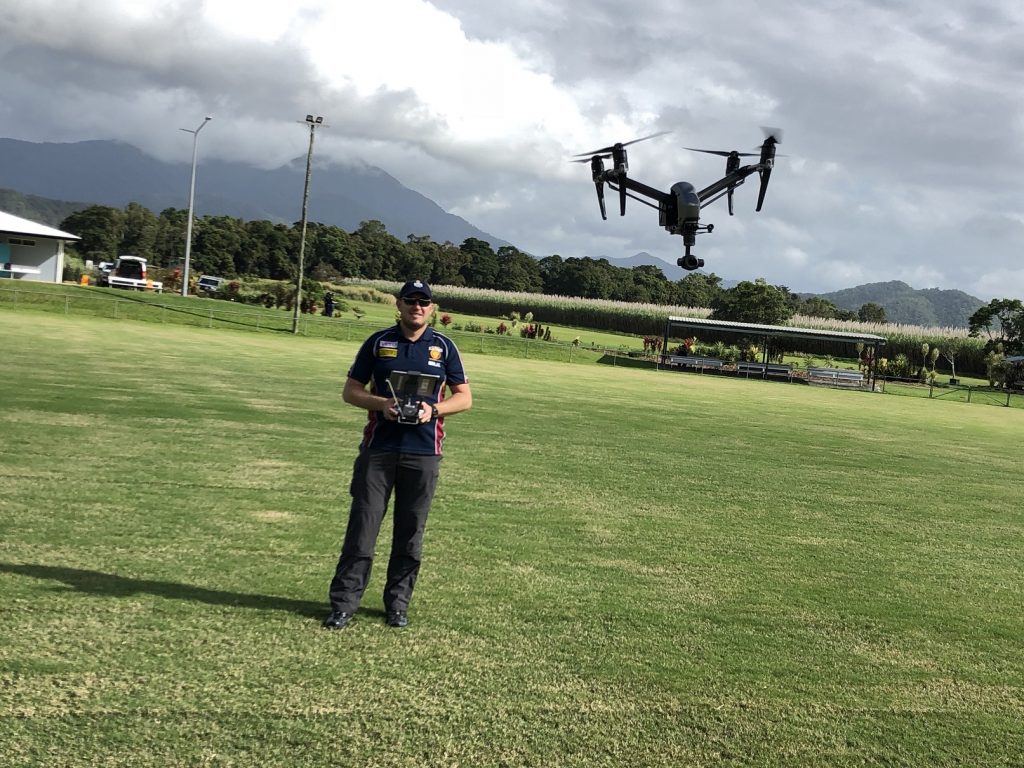
Police Drone Operations: AI Tracking, Loudspeaker & Night Patrol in Practice
Working the law enforcement market for years, I tell clients the same thing: a police drone isn't "giving officers a drone" — it's giving a patrol team a pair of eyes and a voice. The eyes are AI tracking + thermal imaging; the voice is the loudspeaker. When the three work together, one drone can do the job of a patrol squad.
That's not an exaggeration. The Chula Vista Police Department has run a Drone-as-First-Responder (DFR) program since 2018: drones reach the scene in an average of 95.7 seconds, with over 22,000 deployments and 71% of incidents where the drone arrived first. The program also saved 25% of ground dispatches — the drone confirmed no response was needed before a car was sent. China's police are scaling the same playbook: a 30-minute night arrest using thermal imaging, and a drone reaching a dispute scene in 2 minutes. These aren't demos — they're everyday operations.
This article breaks down the real logic of police drone operations: five core missions, how AI tracking actually "holds" a target, how to use the loudspeaker, the value of thermal night patrol, integration with command centers, and the four traps that sink deployments.
Updated August 2026, based on publicly available information and field experience.
Key numbers at a glance:
- Global police drone market ~USD 821.5 million in 2025, projected to USD 1.76 billion by 2032 (CAGR 11.45%, PW Consulting); North America holds nearly 40% share
- Chula Vista DFR program (2018–present): drones average 95.7 seconds to reach the scene, 22,938 total deployments, first on scene in 71% of incidents
- DFR saves 25% of ground dispatches on average — the drone verifies the scene first, so no patrol car is sent when none is needed
- China police field results: 30-minute night arrest using thermal imaging; drone reached a dispute scene in 2 minutes, resolved in 8; 71 seconds to reach a person threatening suicide
- 1,400+ U.S. police departments use drones (2025), and FAA simplified DFR waivers in 2025, triggering a surge in applications
- Loudspeaker + searchlight combo: a single drone can simultaneously broadcast warnings, light the scene, and record video
- Night thermal imaging: human body heat is clearly visible in total darkness, no longer relying on the naked eye to find hidden suspects
What police drones do: five real missions
Understand the use cases first; the technology makes sense after that.
① Large event security
Marathons, rallies, sports events — a drone overlooks the whole scene from above, paired with AI anomaly detection, one route covers tens of thousands of people. Chinese police used preset patrol routes at a marathon to spot a collapsed runner and guide medical teams to the scene.
② Traffic enforcement and management
"Air traffic police": drones with loudspeakers patrol congested roads, broadcast rerouting instructions in real time, and spot vehicles illegally occupying emergency lanes. During one Chinese holiday period, police drones flew 220+ hours over a highway with zero major congestion.
③ Pursuit and location
This is where drones earn their keep most. A suspect abandons a car and flees into hills or buildings — ground search is slow and risky; a thermal-equipped drone locks the human heat signature from above and guides the ground encirclement. In Pingyuan, China: suspect fled into woods, thermal drone tracked the escape route, ground units encircled — arrested in 30 minutes.
④ Crowd control and loudspeaker
Group incidents, disputes — the drone arrives first, the loudspeaker warns and calms, the searchlight lights the scene, and video records everything. In Luzhai, China: drone reached a parking dispute in 2 minutes, broadcast a warning, and the whole incident was handled in 8 minutes from call to resolution.
⑤ Night patrol
Industrial parks, reservoirs, school perimeters — thermal imaging ignores darkness, finds hidden people, identifies unusual activity, and the loudspeaker warns directly: "Your behavior has been recorded. Please leave immediately."
AI tracking: from "captured" to "held"
Auto-lock and persistent tracking
Capturing the image isn't enough — the key is locking the target and holding it until ground units arrive:
- Target detection → AI auto-establishes a tracking frame → the drone orbits or follows continuously
- Type classification: person / vehicle / animal — reduces false alarms (a seagull or stray dog is no longer a "suspect")
- Anomalous behavior detection: fence crossing, entering restricted areas at night, prolonged loitering
- Real-time feed: command center sees the same picture and dispatches ground units at any moment
In Shangrao, China: after the command center issued the order, the drone was on scene in 30 seconds, streaming the suspect's appearance and escape route, and ground units intercepted the vehicle.
False alarm control: the lifeline of law enforcement
In law enforcement, false alarms aren't "annoying" — they burn officers' trust in the system. If the drone keeps alerting on innocent passersby, officers stop watching. That's the most dangerous outcome.
- Fine-tune the recognition model with real local footage before deployment (streets, vehicles, streetlights, animals — all need training data)
- Set tiered alerts: separate "observe" from "respond immediately" to reduce noise
- Trial run for 2+ weeks, adjusting thresholds based on actual false-positive rates
The loudspeaker: the drone's "second voice"
The loudspeaker is the most underrated payload on a police drone — it turns the drone from "seeing" into "speaking and controlling."
Three typical uses
| Scenario | Loudspeaker message logic | Effect |
|---|---|---|
| Crowd control | "We are the police. Please stay calm and cooperate." | Deters + calms, buying time for ground units |
| Warning and eviction | "Your behavior is being recorded. Please leave immediately." | Night patrol intrusion — most people leave on their own |
| Direction and guidance | "Congestion ahead, please reroute." "Please don't act impulsively, we are here." | Traffic management + crisis intervention |
The combo in practice
The full sequence from Ruijin, China (suicide intervention): drone reached the scene in 71 seconds → thermal locked the person's position → searchlight lit the scene → loudspeaker calmed the person in real time → aerial warnings to bystanders filming. One drone did four things at once — that's the value of the "eyes + voice + light" combo.
Selection notes (loudspeaker deeply compatible with mainstream DJI drones, plug-and-play via flight controller protocol):
- Sound pressure level: outdoor crowd environments need enough volume — check the spec
- Voice clarity: the message must be intelligible, not just loud
- Endurance impact: the loudspeaker draws real power — factor it into total flight budget
Night patrol: the value of thermal imaging
The night "eyes"
The hardest part of urban policing is nighttime — poor lighting, blind spots, suspects who "disappear" into the dark. Thermal imaging is completely unaffected by light:
- Human 37°C heat is clearly visible at 200–300 meters, equally effective in total darkness
- Targets hidden in bushes, under bridges, behind vehicles — thermal sees the heat signature through partial cover
- Industrial parks, reservoirs, construction sites — one route covers the whole area
Working with fixed surveillance
Night drone patrol doesn't replace fixed cameras; it fills their blind spots: fixed cameras watch the entry points, the drone patrols open areas and remote corners — one covers points, the other covers the area. This "aerial patrol + ground surveillance" combo follows the same logic we documented in our border security drone guide — city and border are just different scenes; the foundation is the same "AI recognition + thermal + persistent patrol" trio.
Command center integration
The drone is not an island
60% of a police drone's value is in the "feed back": live video to the command wall, and the commander sees the full picture before officers arrive — "eyes arrive before the officers do."
- Video stream to command center wall (standard protocols: RTMP/ONVIF)
- Drone position/track plotted in real time, linked with ground unit positions
- One-click dispatch: the command center takes over the drone, or assigns a route
The trend toward automated docks
More cities are deploying drone docks: docks on high points across the district, auto-launch on alert, auto-patrol, auto-return and charge — no pilot needed, response on alert. Ruijin's "drone-first" mechanism: 2 docks deployed grid-wide, reaching any point in the district in an average of 3 minutes.
Retrospective: four traps that sink police drone deployments
Trap 1: buying the hardware, skipping the workflow
The drone sits in a corner — no operating procedures, no on-duty mechanism, no alert-response path. A police drone is a "system," not "equipment." Decide who operates, who dispatches, and which alerts trigger a flight before deciding what to buy.
Fix: build an "launch on alert" process like DFR programs, starting with one district and one drone.
Trap 2: too many false alarms, officers stop watching
Recognition model not fine-tuned locally, constant false alerts — officers stop watching the feed after a few false alarms. The system is dead.
Fix: fine-tune with real local video before deployment, tiered alerts, trial-run parameter tuning. This is a hard acceptance criterion for law enforcement projects.
Trap 3: endurance shortfall, missions cut off
Urban scenes are unpredictable; a pursuit can last 1–2 hours — a 30-minute battery drone has to return mid-chase. Endurance and spare-battery planning must be budgeted upfront, with multi-drone rotation or dock auto-swap if needed.
Fix: plan batteries and charging by "continuous monitoring hours," not just the single-drone endurance spec.
Trap 4: ignoring privacy compliance red lines
Law enforcement drones touch citizen privacy, and regulations differ across countries. Flying over private places without authorization, or prolonged hovering without approval, can trigger legal trouble and backlash.
Fix: define operating rules (which areas are flyable, which are not), data retention periods, and disclosure policies — compliance isn't a burden, it's what keeps the program running. See our Egypt drone regulations guide and Saudi drone regulations guide for different markets' red lines.
One-line summary
The value of a police drone isn't "seeing" — it's "tracking, broadcasting, and commanding." AI tracking means the target can't escape; the loudspeaker means the scene stays under control; thermal imaging means the night is visible; the feed link means command acts faster. The global police drone market was USD 821.5 million in 2025, growing 11%+ a year — this isn't a trend, it's already the daily routine. Before choosing equipment, ask: are your "eyes, voice, and command chain" ready?
We need your scenario
Whether you're a law enforcement agency, a systems integrator, or a manufacturer looking to enter the law enforcement market, send us a description of your situation and we'll produce a configuration plan and deployment advice at no charge.
- Law enforcement agencies (building a drone patrol system) → we deliver a complete "platform + payload + workflow" plan, including AI tracking gimbal, loudspeaker, and thermal selection
- Integrators (working on law enforcement projects) → we provide OEM cooperation + bid support (see the government drone procurement guide for the bidding process)
- Manufacturers (exploring the law enforcement market) → we share scenario experience and product adaptation advice
Message us on the inquiry page with "police drone" in the subject. A technical team responds within 24 hours. Selection consultation is free.
FAQ: Frequently Asked Questions
What permits do police need to use drones?
Regulations vary widely by country. Most require operator certification and airspace approval: U.S. DFR programs need an FAA waiver (greatly simplified in 2025, from 11 months to under a week); China requires airspace approval; Middle East & Africa varies (see our Saudi regulations guide and Egypt regulations guide). Law enforcement agencies usually have dedicated approval channels — confirm with the local civil aviation/airspace authority early.
How long is the flight endurance of a police drone?
Mainstream multi-rotor police drones fly 25–45 minutes per charge (depending on payload). For law enforcement, plan for "1–2 hours of continuous monitoring": multiple battery sets for rotation, multi-drone relays, or dock auto-swap. Loudspeakers and searchlights increase power draw — calculate endurance at full payload.
How high and far can the drone fly?
Most urban operations run within visual line of sight (VLOS): 120–400 m altitude, 1–3 km radius (subject to national airspace rules). Chula Vista's DFR program extended its radius from 1 mile to 3 miles via a BVLOS waiver. Confirm with local airspace permits.
What can you see at night?
Thermal imaging ignores darkness: human 37°C heat is clearly visible at 200–300 m, and targets hidden in bushes, under bridges, or behind vehicles can be found. A visible-light camera adds low-light detail identification. The searchlight provides aerial lighting for ground units' work areas.
How far and clear is the loudspeaker?
Effective range depends on sound pressure level and the environment (city noise, wind noise affect it). For law enforcement, choose a model with sufficient SPL and clear voice — "intelligible content" matters more than "loud." The loudspeaker is deeply compatible with mainstream DJI drones, plug-and-play via flight controller protocol, handling warnings, direction, and calm-down messages in one mission.
Can drones integrate with existing command systems?
Yes. Mainstream police drones support standard protocols (RTSP/ONVIF/RTMP); video can feed into command walls and existing video management systems (VMS). For CAD (computer-aided dispatch) integration to enable "launch on alert," confirm the interface plan with your supplier — see the system integration requirements in our government drone procurement guide.
Disclaimer: This article is based on publicly available information and field experience. Specific regulations and specifications should be verified against official sources and supplier current documentation.