
Saudi Arabia Drone Regulations: GACA 2026 Compliance Guide
More and more manufacturers are chasing deals in the Middle East these days — and eight out of ten get stuck at the same spot: the permit.
It is rarely the product. It is the process. In 2026 Saudi Arabia moved its drone rules from a case-by-case approval system to a risk-based framework (GACAR Part 107 V5). Many suppliers are still operating on old assumptions, and the result is the same: the aircraft arrives, the approval does not, and the fleet sits in a warehouse. This guide walks through the full compliance path — who regulates you, which certificates you need, where the red lines are, and how to make sure your equipment passes review.
Updated August 2026, based on the latest public information.
Key numbers at a glance (worth the read?):
- Saudi Arabia is one of the largest drone markets in the Middle East — over USD 400M in 2025, roughly 30% of the Middle East & Africa region
- Commercial operations require 3 approval layers: Operator Certificate (UOC) → Aircraft Registration → Mission Permit
- UOC costs SAR 4,000–8,000/year, registration SAR 500 per aircraft (mandatory above 250 g)
- Mission permits take 5–21 working days; a cold-start full process runs 6–10 weeks
- Remote ID is mandatory from 2026 for Specific-category equipment
- Daytime temperatures routinely hit 45°C — heat tolerance is a hard requirement in tenders
Why the Saudi market is worth the effort
First, the numbers. Industry reports for 2025 show Saudi Arabia as one of the largest drone markets in the Middle East — annual scale above USD 400M, close to 30% of the entire Middle East & Africa region. Demand is led by defense, oil & gas facility inspection and agricultural modernization — "Vision 2030" has put food security and autonomous critical-infrastructure operations into the national strategy.
For payload and industrial drone suppliers, Saudi has one trait few other markets share: the government pays a premium for compliant products. "Does it meet GACA requirements?" is often the first filter in tender documents. Clear that line, and price becomes less sensitive. That is why a ten-minute read on compliance is worth it.
Who regulates you: GACA and the Part 107 V5 rules
Drones in Saudi Arabia are regulated by GACA (the General Authority of Civil Aviation), under GACAR Part 107. The V5 revision taking effect in 2026 is the turning point — it adopts the EU EASA "risk-based classification" approach, moving from "approve every mission individually" to "manage by risk category."
For suppliers entering the market, this means three things: 1. The process is more transparent — qualifying operations no longer need lengthy case-by-case negotiation 2. The bar is clearer — which operation needs which certificate is written down 3. Equipment requirements got harder — Remote ID, geofencing and similar hardware capabilities are hard thresholds from 2026
The core: three approval layers, all mandatory
Commercial flights in Saudi Arabia go through three gates, in order — skip a step and you start over:
| Layer | What it is | Fee (reference) | Approval time |
|---|---|---|---|
| 1. UOC Operator Certificate | Company-level "operating licence": SOPs, insurance, maintenance records, accountable manager | SAR 4,000–8,000/year | 4–8 weeks for first-time applicants |
| 2. Aircraft Registration | Every aircraft over 250 g must be registered with a Saudi registration mark | SAR 500 per airframe, one-off | Part of the application flow |
| 3. Mission Permit | Per-flight / per-project "release"; 5–10 working days for Open, 14–21 for Specific | Varies by category | See left |
[Fees and timelines are 2026 public information; confirm on the official GACA portal uas.gaca.gov.sa and the GACA website — needs manual verification]
Three details most people miss: - The UOC belongs to the company; registration belongs to the aircraft — you don't re-certify the company for a new aircraft, but every new airframe needs its own registration - Mission permits are per-mission — for recurring work on the same site, apply for a framework approval covering 12 months instead of running the full process every time - Budget 6–10 weeks for a cold start — a team starting from zero should not expect to fly in two weeks
The three operation categories: which one are you in?
Part 107 V5 splits operations into three categories. Know yours before you plan anything:
| Category | Typical use | Limits |
|---|---|---|
| Open | Under 25 kg, visual line of sight (VLOS), under 120 m, away from people | No prior authorization — just stay within the limits |
| Specific | BVLOS, night ops, above 120 m, near critical infrastructure | Requires formal GACA authorization (STS standard scenarios) |
| Certified | Large industrial drones, cargo transport, swarms | Highest tier; managed like manned aircraft |
Key warning: oil & gas pipeline inspection and perimeter patrols almost always fall into the Specific category — because they need BVLOS or proximity to critical facilities. That means your customer must obtain Specific authorization, and the equipment itself must have the technical capability to pass review (see Remote ID below). This is the most miscalculated line for many Chinese suppliers: the gear is cheap but fails Specific review, and the customer ends up buying elsewhere.
Red lines: places you don't touch
Saudi enforces no-fly zones strictly. Crossing them is not a fine-and-done situation — confiscation, licence suspension and even criminal liability are possible:
- The Two Holy Mosques (Mecca, Medina) and surrounds: no flight, period
- Royal palaces and government buildings: no flight, period
- Oil & gas facilities (e.g., Aramco sites): Aramco authorization + GACA permit required
- Within 3 km of military installations: prohibited unless the Ministry of Defence provides written consent
- Within 5 km of airports: permit + ATC coordination required
- NEOM and other new development zones: handled per-mission with GACA
[No-fly zones per the official GACA map — needs manual verification]
Pilots, insurance and other hard requirements
- Pilots: at least 18 years old, hold a GACA remote pilot licence (theoretical exam + practical assessment), medical check every 5 years under 40, every 2 years over 40
- Insurance: third-party liability insurance is mandatory — no insurance, no mission permit
- Night flying: prohibited by default; requires Specific authorization — plan ahead for night inspection jobs
- English proficiency: required for operations in controlled airspace
Remote ID: the hard threshold from 2026
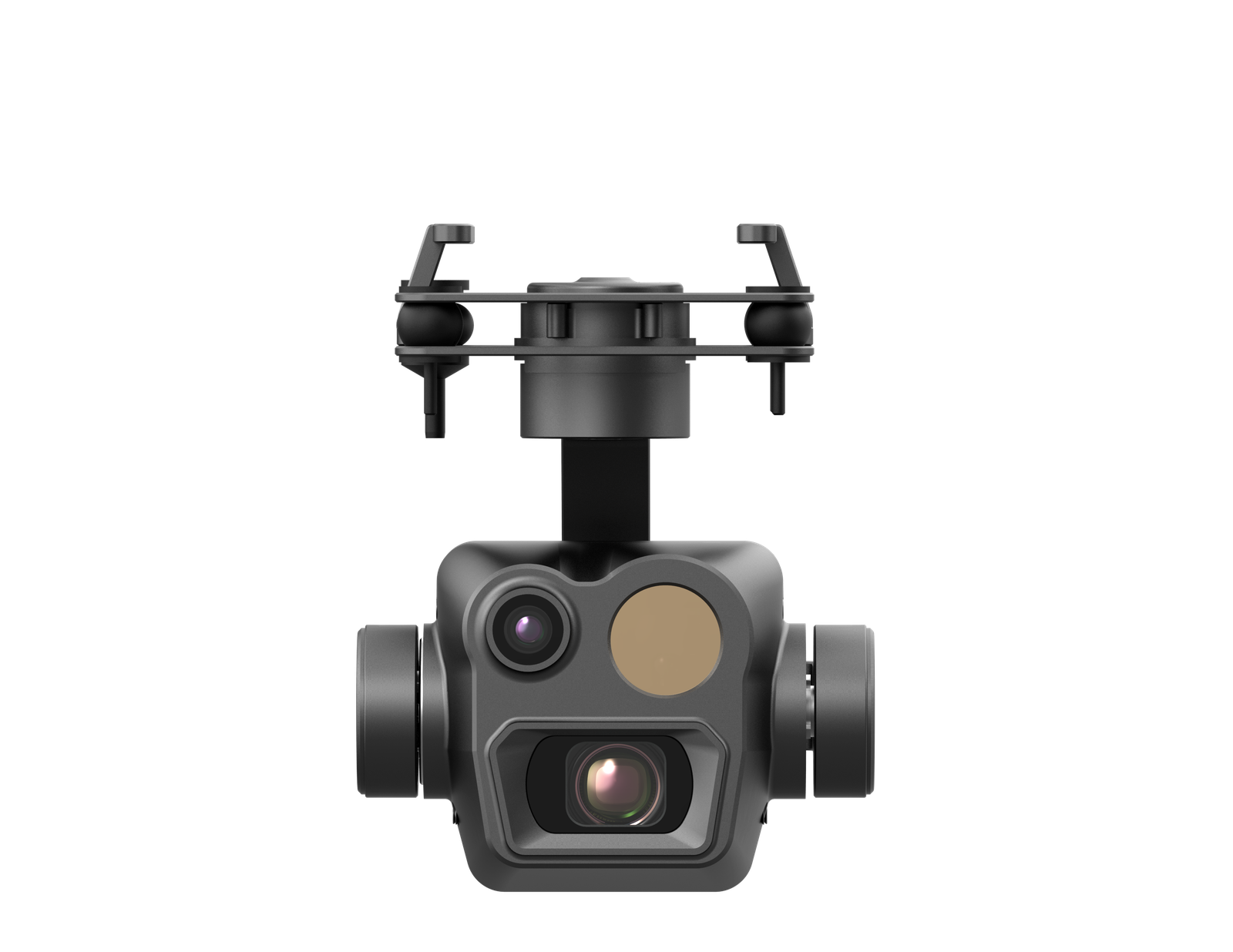
The most notable change in Part 107 V5 is the Remote ID mandate. From 2026, drones operating in the Specific category must carry Remote ID hardware — a "digital licence plate" broadcasting position, altitude and serial number in real time, so regulators always know who is flying where.
The direct impact on equipment selection: - Your aircraft/payload must support Remote ID, or the customer cannot pass Specific authorization - Geofencing capability (automatic avoidance of no-fly zones) is increasingly common in tenders - Flight-data reporting is becoming standard — the UAE already requires real-time operational data reporting for agricultural drones since 2025, and Saudi is only tightening
Not sure whether your current equipment meets these requirements? Send us your model list and we'll verify payload and airframe compliance — far cheaper than discovering it in Saudi.
Retrospective: the four traps Chinese suppliers fall into
After a year-plus in the Saudi market, the failures I've seen basically fall into four buckets:
- Quoting hardware without the paperwork — customer asks "can it fly?", supplier says "yes", and the gear sits at customs with no registration and no mission permit
- Treating Open as universal — under 25 kg doesn't mean under everything; inspection work almost always lands in Specific
- Ignoring the heat — 45°C daytime is the norm; ordinary electronics throttle or fail. Confirm the temperature specs. For unattended solutions in high-heat environments, see our guide on drone-in-a-box: 24/7 unattended inspection; for inspection payload selection, see thermal + zoom dual-sensor gimbals
- No after-sales on the ground — the biggest complaint in the Middle East is repair turnaround. Whoever provides local spare parts and support owns the channel. For automated patrol of critical facilities, see drone perimeter security for critical infrastructure
One-line summary
Saudi is a "compliance-first" market: UOC certificate → aircraft registration → mission permit — walk all three layers before you talk business. On the equipment side, Remote ID, geofencing and heat reliability are the entry tickets from 2026 onward.
For Saudi-bound projects, send us your operating scenarios and model list — we'll prepare a compliance checklist per GACA requirements. Compliance consultation and spec verification are free.
FAQ
What permits do I need to fly a drone in Saudi Arabia?
Commercial operations require three approval layers: a GACA Operator Certificate (UOC, company level), registration for each aircraft over 250 g, and a mission permit per flight. Missing any layer means operating illegally.
How much does drone registration cost in Saudi Arabia?
The UOC operator certificate costs roughly SAR 4,000–8,000 per year, and aircraft registration is SAR 500 per airframe (2026 public figures — confirm on the official GACA portal).
Where are drones banned in Saudi Arabia?
The Two Holy Mosques (Mecca, Medina) and surrounds, royal palaces and government buildings are strictly no-fly; oil & gas facilities require Aramco authorization; within 3 km of military installations or 5 km of airports is prohibited or requires special permits.
Can foreigners operate drones in Saudi Arabia?
Yes, but the company must hold an operator certificate and pilots need a GACA remote pilot licence with the required medical and age checks; the cold-start process takes about 6–10 weeks.
What changed in Saudi drone rules for 2026?
GACAR Part 107 V5 introduces the Open/Specific/Certified risk-based system aligned with EU EASA standards; Remote ID becomes mandatory for the Specific category; BVLOS and night operations are managed under standard scenarios (STS).
What equipment requirements apply to drones in Saudi Arabia?
Equipment must support Remote ID (mandatory from 2026) and ideally geofencing. Given the 45°C daytime norm, heat tolerance and reliability are hard considerations in Saudi tenders.
Disclaimer: regulations change continuously; this article is based on 2026 public information. Always confirm with the official GACA publications.