Middle East & Africa Drone Market Analysis 2026: What the Regional Data Shows
If you are deciding whether to enter the Middle East & Africa drone market, this article gives you a data foundation. Our order growth in the region has outpaced every other market for two years — but what matters is not our own numbers, it is how the regional market is moving: where the money is, where the volume is, who is buying, and where the bottlenecks are.
This article lays out the public data on the Middle East & Africa drone market in 2026, from the Gulf to sub-Saharan Africa — the growth engines, the blockers, and how procurement decision-makers should read these numbers before entering.
Updated August 2026, based on public information and field experience.
Key numbers at a glance:
- Middle East & Africa drone market ≈ USD 7.7 billion in 2026, projected to reach USD 17.67 billion by 2035, growing 9.66% per year (Next Move Strategy Consulting)
- Volume is growing faster than value: 246,000 units in 2025 → 922,000 units by 2035, unit CAGR 13.35% — prices are falling while volume surges
- MEA holds 4.1% of the global market (2025) but grows faster than the global average — a low-base, high-growth market
- Commercial drones are a key engine: USD 1.15 billion in 2025, expected to reach USD 2.03 billion by 2032 (MMR)
- Saudi Vision 2030 and the UAE national AI drone program: Gulf procurement centers on oil & gas, security and smart cities
- Africa is leapfrogging: skipping weak ground transport to go straight to drone logistics, medical delivery and precision agriculture
Why it is worth watching now: low base, high growth, twin engines
First, the practical question: why spend time on this market? Three reasons.
First, low base, high growth. MEA is only 4.1% of the global drone market, but it grows faster than the global average. A small base means a lower entry barrier and a competitive landscape that has not solidified; high growth means early movers get a head start.
Second, a twin-engine structure. The Gulf and Africa are two completely different markets, representing two different opportunities: the Gulf is "high ticket price, policy-driven" (oil & gas, security, smart cities — buying professional equipment that does the job), Africa is "high growth, demand-driven" (logistics, agriculture, medical — wanting cheap, reliable, workable solutions). Two engines turning together make the market more resilient than a single one.
Third, the policy window is opening. Gulf states and several African countries are pushing BVLOS (beyond visual line of sight) regulations, moving commercial use cases from "pilot" to "scale". Regulation opening is the leading signal of market takeoff.
The Gulf: oil & gas, security and smart cities are the three buyers
Gulf procurement (Saudi Arabia, UAE, Qatar) follows a clear logic: national strategy plus big-project budgets.
- Oil & gas: Saudi Aramco- and ADNOC-scale facility inspection demand, aligned with Vision 2030 unmanned goals — oil & gas drone inspection is a sustained procurement item. Our desert oil & gas inspection guide shows the concrete requirements.
- Security: border patrol, perimeter protection, large-event security — government and semi-government bodies are the main buyers.
- Smart cities: the UAE has written drones into its national AI program; urban mapping, traffic monitoring and emergency response are all being rolled out.
The Gulf market profile: ample budgets, compliance-focused, demanding professional equipment that survives 50°C heat and dust, low price sensitivity. Compliance reading like our Saudi Arabia drone regulations guide is required reading before entry.
Africa: the leapfrog opportunity in logistics, agriculture and medical delivery
Africa works on a completely different logic — not policy-driven but demand-driven.
Across most of sub-Saharan Africa, ground transport is weak and infrastructure gaps are wide, which makes drones the faster answer:
- Logistics and delivery: medical supply drone delivery in Kenya, Rwanda and others is already operating at scale — the most mature African drone use case
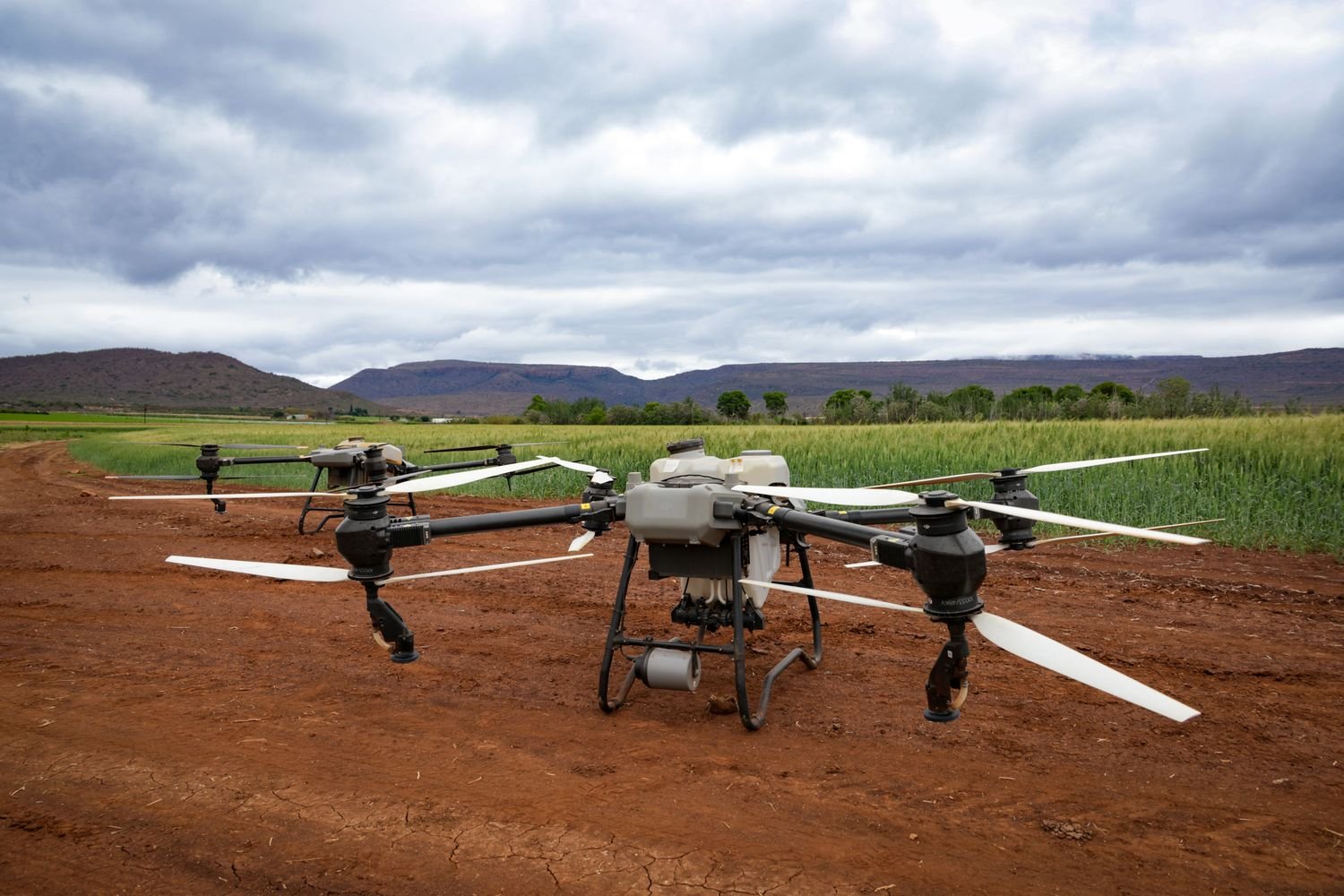
- Precision agriculture: spraying, crop monitoring and mapping on large farms, skipping traditional farm machinery entirely
- Emergency and security: security and border needs in Nigeria and others — see our Nigeria drone import guide
The Africa profile: high volume but low unit price, extremely cost-sensitive, needing "workable" practical solutions — and regulatory and infrastructure fragmentation makes local channels especially important.
Growth engines and blockers: where 2026-2030 goes
To analyze the next five years, lay out both the tailwinds and the headwinds:
Tailwinds: - BVLOS regulation progress (UAE, Saudi Arabia, South Africa, Kenya leading), commercial scenarios moving to scale - Gulf sovereign wealth investment (Vision 2030, national AI programs) - Africa's population growth + urbanization + infrastructure leapfrogging, logistics/agriculture demand expanding - Drone costs falling, more mid-size buyers can afford them
Headwinds: - Regulatory fragmentation across 54+ jurisdictions, high cost of cross-region deployment - Political and conflict risk in some areas, affecting project delivery - Shortage of professional pilots and after-sales networks — equipment bought but nobody maintains it is a common problem - Import controls and tariffs (some countries restrict drone imports)
For buyers the implication: opportunity is in "regional depth", not "full coverage" — doing one country/scenario properly beats spreading thin.
From data to decision: four recommendations
- Do not make regional decisions with global data: global growth ≠ MEA growth; choose the right regional figures
- Choose the scenario first, then the country: oil & gas → Saudi/UAE; logistics → Kenya/Rwanda; the scenario decides the country
- Budget for service: equipment is only part of a project; pilot training, spare parts and after-sales are both long-term revenue and long-term investment
- Compliance first: every country has different registration, import and flight rules — our drone distributor program lays out the complete market-entry playbook
Lessons learned: the four traps that sink market entries
Trap 1: treating the Gulf and Africa as one market. One is high-ticket and policy-driven, the other is high-growth and cost-sensitive; the playbooks are completely different. Applying Gulf tactics in Africa, or vice versa, fails in the first year.
Trap 2: watching only airframe sales, ignoring the service need. The data shows volume rising, but Africa's biggest pain point is no after-sales. Selling hardware without building service means no repeat customers and no reputation.
Trap 3: ignoring regulatory fragmentation. 54+ jurisdictions, each with different registration and import requirements. Building channels without compliance homework means one held shipment is enough to wipe you out.
Trap 4: passing off global report numbers as regional analysis. Global market size figures are nothing like the Middle East & Africa numbers; the wrong data sends the wrong direction.
The one-line summary
The Middle East & Africa drone market is around USD 7.7 billion in 2026 with unit sales growing 13.35% a year — the Gulf plays policy, Africa plays demand; pick the right scenario, lead with compliance, back it with service, and this low-base high-growth market becomes your growth curve.

Tell us your market: scenario in, entry plan out
If you are evaluating a country or scenario in the Middle East or Africa, send us your target market (country, scenario, budget range) and get a full market-entry proposal: regional data reading, product and compliance configuration, channel strategy. Consultation is free. If you want context first, our global drone industry data retrospective is a good place to start.
Send your target market, submit an inquiry
FAQ
How big is the Middle East & Africa drone market now?
Around USD 7.7 billion in 2026, projected to reach USD 17.67 billion by 2035 (Next Move Strategy Consulting). The commercial drone segment was USD 1.15 billion in 2025.
Which countries are growing fastest?
Gulf: Saudi Arabia and the UAE (policy-driven). Africa: Kenya and Rwanda (logistics/medical), Nigeria (security/agriculture), South Africa (fastest overall growth).
What is the difference between the Gulf and African markets?
Gulf: high ticket, policy-driven — oil & gas/security/smart cities. Africa: high growth, cost-sensitive — logistics/agriculture/medical. Completely different playbooks.
Is it too late to enter?
No. The base is small (4.1% of global), growth is above average, and BVLOS regulation is just opening — 2026-2030 is the window, but you need to pick a scenario and go deep.
What is the biggest risk in this market?
Regulatory fragmentation (54+ jurisdictions) and missing after-sales networks. Skipping compliance homework leads to direct losses; selling hardware without service never scales.
How do I choose which country to enter?
Scenario first, country second: oil & gas → Saudi/UAE; logistics/medical → Kenya/Rwanda; security/agriculture → Nigeria; unsure — send us your requirements and we will assess.
Disclaimer
This article is based on public information and field experience; market data cites public industry reports (Next Move Strategy Consulting, MMR and others). Specific configurations, pricing and compliance requirements are subject to official documents and project evaluation.
Image credit: photos from Pexels (pexels.com), used under the Pexels license, free for commercial use, attribution not required.